

Airbnb Under Pressure: EU Short-Term Rental Rules Spark a Prague Host Meltdown
When an Airbnb employee nervously opened the floor for questions on a Zoom call with Prague hosts, she unwittingly became a crisis manager. Panic about taxes, paperwork, registration laws — even a public accusation about someone owning way too many flats — all erupted in minutes. The new EU short-term rental regulation isn’t just a policy shift; for many hosts, it’s an existential threat. And the chaos on that call said everything.
The Day Airbnb Faced Czech Hosts
This past summer, I found myself on a pretty tense Zoom call between an Airbnb representative and hosts from the Czech Republic. A friendly lady delivered a speech addressing the upcoming EU Short-Term Rental regulation, while there was calm before the storm in the chat.
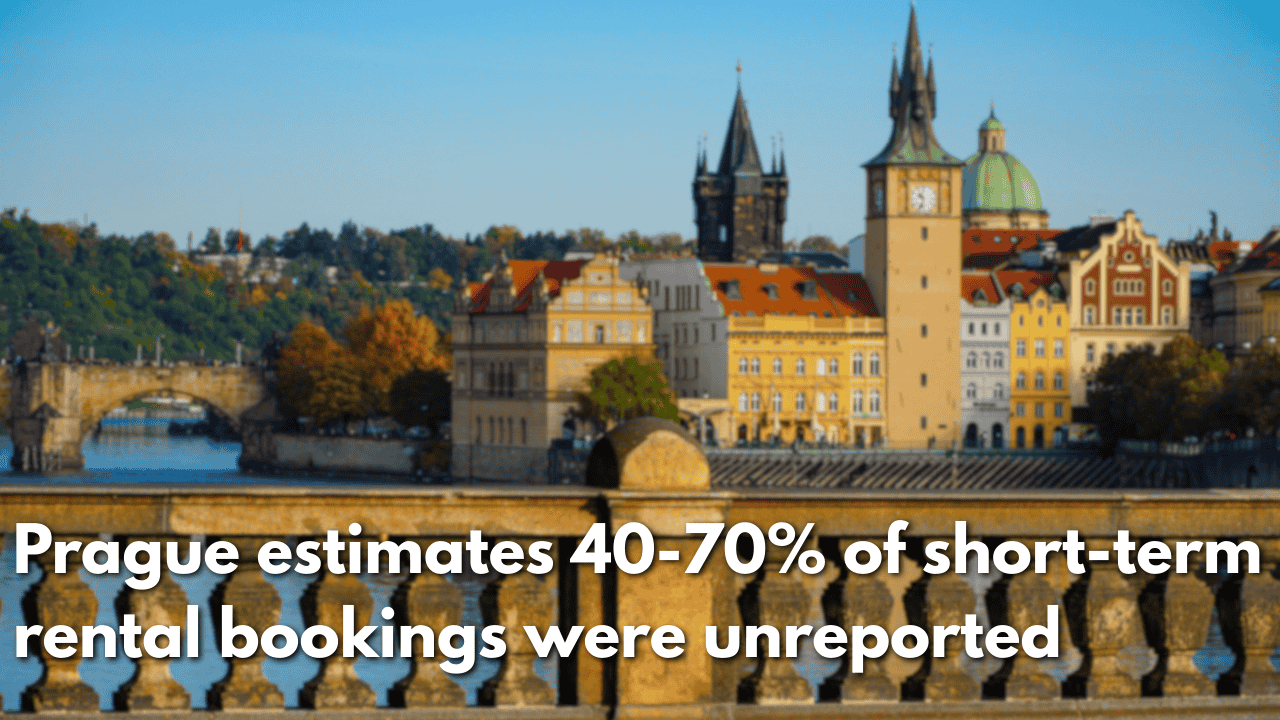
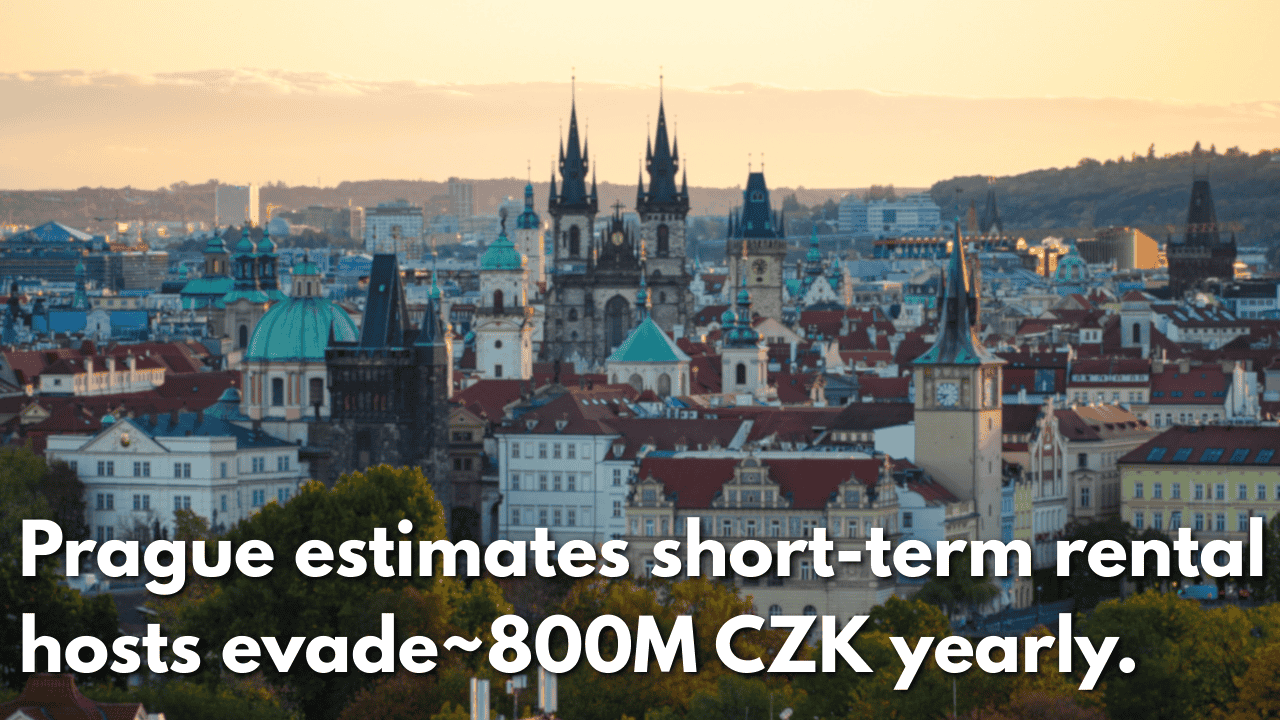
In a nutshell, the previously Wild West short-term rental market in this region was about to be brought into compliance by the Czech government, which had been missing out on over 800 million CZK in unpaid taxes. In practice, it meant that landlords had to register their properties and submit information about their guests to the local authorities. After breezing through the technicalities, the Airbnb representative paused and rather anxiously added: “You can ask your questions now.” By a slight affliction in her voice, I guessed that this was the part she was most nervous about. Turned out, it was for a good reason. As I learned later, the hosts had been waiting for this conversation for months, and Airbnb was slow to deliver.
The chat blew up. She was addressing concerns one by one, as people turned on their audio to inquire about whether they needed to register all of their listings, even those in different countries, or what to do if clients refused to provide their passport details. The speaker tried to calm everyone down, reassuring them that as soon as the Senate schedules a hearing for the so-called Tourism Law, she would update them. Still, the conversation was lively with people lamenting and pondering if the Czech government would try to regulate the number of days hosts are allowed to rent their apartments and other possible horrifying outcomes. I was hungrily listening, imagining what it feels like to own an apartment, let alone a beach house in Spain.
The poor Airbnb employee’s face lit up when a certain Marek (not his real name, obviously!) “raised his hand” on a chat. Clearly, he was a familiar face. Marek, in fact, did not have any questions but just wanted to say something uplifting, to which she smiled. However, his optimism was immediately shut down by the next speaker, who added—half–joking, half–accusing—that not everyone was as lucky as him: “We all know you have, what, two dozen apartments in the city center, Marek!” Whether that number was real or just drama of the moment, it definitely killed the mood. Marek didn’t try to lift anyone’s spirits after that. Listening to this argument made me remember the first time I heard about Airbnb.
When “Everyone Is Doing It” Becomes a Problem
Once an acquaintance of mine, who had an Airbnb listing, visited my humble rental, and proposed that we register it on the platform as well. I laughed: “I am sorry to disappoint, but I don’t own this apartment.” “That’s okay, I don’t own mine either,” he said nonchalantly. “Wait, but how can you rent it then?” I asked in shock. “My landlord does not know, but that’s okay. EVERYONE I know is doing it this way!” he reassured me. Turns out, he’s been renting out his entire place for years and was quite successful; hundreds of positive reviews and not a single suspicious customer. His cozy 2-bedroom apartment in Bubeneč district was not a catfish: spacious, bright, with a perfect kitchen and a view of a well-kept courtyard.
Bubeneč has been taken over by short-term rentals. Vprazedoma - a citizens' initiative to stop Airbnb in Bubeneč - claims the number of listings is way over the offering for long-term rentals, which is driving locals away from their beloved area. That made me feel even worse about my acquaintance: his landlord was nice enough to rent his property long-term and was screwed collaterally. Perhaps, there were more people who suffered from the same problem but never spoke out about it. There are no statistics on how many illegal Airbnb rentals like that exist, but the shady side of that business seems to be ever-present. Scams have always been part of the deal, and even such pros as Booking.com and the above-mentioned Californian startup can never do enough due diligence. Fake listings sprout up like mushrooms after rain, and all they can do is warn potential victims not to take conversations outside the platforms where scammers request bank details and other sensitive data.
While hosts are frightened at the prospect of bending under new EU regulations and complain that the idea of a free market has been compromised, Czech law might soon require them to register their properties under the so-called kolaudace. That means each apartment unit would have to be reevaluated as a rental space, much like a former factory that needs to be recertified before becoming a gallery. This was the talk of the town last year when the beloved Kasárna Karlín — a concert and leisure space with a café and summer cinema — allegedly had to shut down because it was missing the necessary paperwork. I think there will be enough bureaucracy for thousands of Airbnb hosts to keep Czech bureaucrats busy until 2030!
How Lax Laws Shaped a Culture of Loopholes
To come back to the Zoom call with Airbnb employees, it was quite insightful to learn about what goes on behind the scenes. Years of lax regulations made people feel quite entitled to what they had, even if some of their income might have been coming through several loopholes in Czech law. For example, if you do not register your property as a business, you might not only avoid paying taxes on that, but also on advertising on foreign websites, which is around 20%. Not to excuse dodging taxes, but many people are desperate to earn that extra income, so they seize any opportunity they can. Interestingly, Brian Chesky and his friend, Joe Gebbia, also started their company, AirBed & Breakfast, by seizing an opportunity. Apparently, there was a design conference in San Francisco and all hotels were booked out, so they bought 3 inflatable mattresses and rented them for $80 a piece, effectively selling air for a lot of money. Now they have a billion-dollar company that is still trying to stick to their original motto, “travel like a local,” which is harder and harder to live up to. All I am hoping for is that I will not have to resort to Airbeds because I will forever hold a grudge against Brian and Joe.
Is it Airbnb’s fault, though?
The famed startup had attempted to defend its reputation in a recent Overtourism Report that was meant to set the record straight. According to Airbnb’s research, hotels were actually driving more tourists to cities; therefore, the blame for the influx of travelers was placed on the traditional accommodation industry. While that is most likely true, I doubt that locals who protest against Airbnb and other short-term rentals want to move into a hotel — but that two-bedroom listing with a view of La Sagrada Familia looks amazing!
When it comes to Prague, it gets a little more complicated. Many people sold their central properties to Western companies after the fall of communism because the renovation of historical houses was simply too costly. So when Czechs complain that locals cannot afford to live in the city center, I cannot help but think that it is not just the fault of Airbnb, hotels, or McDonald’s; it is most likely a result of late-1990s policies. As for STRs driving rental prices… I would leave that to the experts to argue.
Europe’s cities are clearly entering a new phase — one where loopholes shrink, paperwork expands, and the idea of “travel like a local” finally bumps into the reality of locals who can no longer afford to live in their own neighborhoods. The Zoom call I listened to was just a tiny snapshot, but it revealed the larger tension playing out across the continent: hosts terrified of change, residents exhausted by it, and platforms caught in between. If regulation can bring a little more balance back to the cities we all love, maybe that’s not the worst outcome. And if it means fewer airbeds and more actual homes, then I think we’ll all sleep better — even Brian and Joe.
WRITTEN BY VALERY
Licensed Prague guide and co-creator of Real Prague Guides (50K+ YouTube subscribers). My company, 100 Spires City Tours, leads some of the highest-rated tours in Prague.
📷 Instagram: @realpragueguides
📺 YouTube: Real Prague Guides
🎫 Book a tour: tours-prague.eu
Disclaimer: This article reflects the personal opinions of the author and is not intended to discourage visitors to Prague from businesses mentioned above.