

Prague 2025 Tourism Boom: What It Means for Your 2026 Trip
Prague is closing out 2025 as one of Europe's most popular tourism destinations, with new data revealing a strategic shift that reshapes travel planning for 2026. While visitor numbers may seem modest on the surface, what's happening beneath the statistics tells a compelling story about the city's evolution—and what travelers should expect when they arrive. I'm Valery, founder of Real Prague Guides and 100 Spires City Tours, and I've spent the past decade guiding visitors through Prague's neighborhoods—so my colleagues and I watched this transformation firsthand.
The Numbers Behind Prague's 2025 Success
The Czech Statistical Office confirmed that Prague welcomed 6,032,136 tourists in the first nine months of 2025, representing a 2% increase year-over-year. That may sound insignificant, but it masks a fundamental transformation. The city isn't chasing visitor volume; it's cultivating a different type of traveler—one with deeper pockets, higher expectations, and genuine interest in cultural experiences beyond bar hopping.
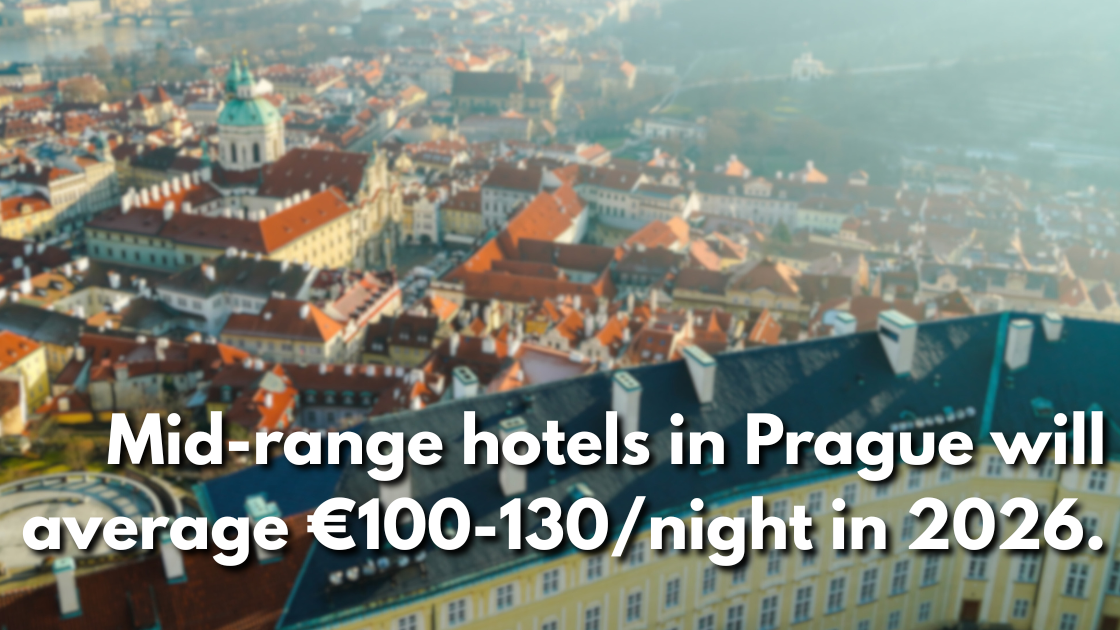
The hotel sector tells this story most vividly. Average hotel occupancy in Prague reached 75% across the first three quarters, with peak-season periods consistently exceeding 80%. More significantly, average room rates climbed to €117 per night (approximately 2,900 CZK), a 3-euro increase from 2024. Prague's pricing now rivals Vienna, reflecting both rising operational costs and successful repositioning as a premium destination.
Perhaps most telling: approximately two-thirds of hotel guests chose four- or five-star accommodation. This isn't the backpacker Prague of a decade ago. Affluent travelers are voting with their wallets, and Prague's tourism leadership is deliberately channeling that investment into luxury hospitality and upscale dining rather than expanding budget capacity.
Where Prague's Visitors Are Coming From
Germany remains Prague's top source market with 730,931 arrivals, followed by the United States (371,492) and the United Kingdom (359,179). But the most dramatic growth is arriving from further afield—and it's reshaping the city's marketing strategy.
U.S. visitor numbers surged 9% after direct flights resumed between New York and Prague, while Chinese arrivals jumped an impressive 31% following the resumption of Beijing services by Hainan Airlines. Overall, Asian visitor numbers grew 12% year-over-year, with particularly strong performance from Israel (133,597 arrivals) and South Korea (133,200 arrivals). These travelers actively seek premium services, fine dining, cultural events, and five-star accommodations.
The diversification extends beyond traditional tourism markets. Prague is attracting growing numbers from Japan, Saudi Arabia, and the United Arab Emirates—all markets historically underrepresented in Central Europe.
Prague's Strategic Pivot: Quality Over Quantity
Deputy Mayor Jiří Pospíšil was explicit about the city's philosophy: "An increasing number of tourists is not a priority for Prague." Instead, the goal is to distribute visitor spending more effectively and protect the UNESCO-listed historic core from degradation. This isn't just political rhetoric—it's reflected in concrete investment decisions.
In March 2025, the Prague City Council approved a CZK 22 million (roughly €900,000) marketing budget targeting sophisticated, high-spending audiences. Rather than generic "Visit Prague" campaigns, these initiatives position the city as a hub for fine dining, cultural prestige, and premium experiences. The strategy is working: tourist spending has already risen 40% since 2019, even as visitor volume growth remains modest.
Save Money on your Prague Trip and Watch This Video!
Prague now costs more than Budapest, Krakow, Warsaw, and Ljubljana—destinations that once defined Europe's budget travel circuit. Visitor behavior is shifting away from the traditional 'hits' circuit—Old Town Square, Charles Bridge, Prague Castle—toward secondary attractions like Vyšehrad, Prague Zoo, the Botanical Garden, and the National Technical Museum. This geographic dispersal is precisely what city officials seek, reducing pressure on the overcrowded historic core while distributing tourism spending across the broader city.
If the trend continues, Prague authorities may have to address a different issue: locals’ unhappiness with tourists occupying their favourite restaurants and hangout spots. Travelers often struggle to know whether they are intruding on Praguers’ comfort zones, so the blame should not fall on them but on those who knowingly send visitors to, let’s say, restaurants notorious for giving tourists a cold shoulder.
Hotel Booking: What You Need to Know for 2026
Prague's hotel market is booming, and that means one thing: book early. Seven new hotels opened between August 2024 and August 2025, but most added luxury properties in the Old Town district—the already-crowded heart of Prague. This creates a paradox: more rooms overall, but fewer mid-range options where most travelers want to stay.
❤️Where is the best place to stay in Prague?❤️
What this means for you:
Book 2-3 months in advance. Peak-season occupancy regularly hits 80%, and mid-range hotels (€100-120/night) sell out fastest. If you wait until spring to book a summer trip, you'll find limited availability or inflated prices.
Consider neighborhoods beyond Old Town. Vinohrady, Holešovice, and Žižkov have fewer hotels but are experiencing surging demand. You'll find better availability, lower prices, and a more authentic Prague experience. A 15-minute metro ride is worth the savings and the real neighborhood vibe.
❤️Best Hotels Outside Prague’s City Center❤️
Expect prices to stay high. Hotel investment in Prague hit €417 million in early 2025—investors are betting heavily on continued growth. Room rates aren't dropping; they're climbing. The earlier you book, the better your rate lock-in.
The 2026 Reality: Price Increases and Regulatory Changes
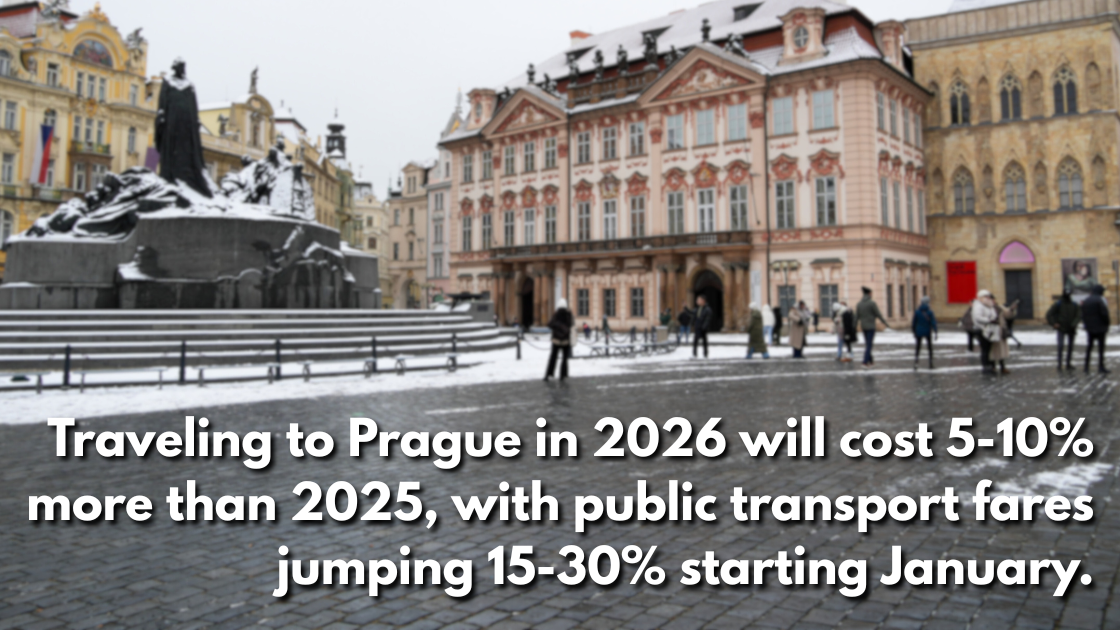
Prague City Tourism projects that 2025 will be one of the most successful tourism years in the past decade, with strong expectation that the city will surpass pre-pandemic 2019 visitor levels by year's end. However, arriving in 2026 will cost more—and the changes extend beyond hotel rates.
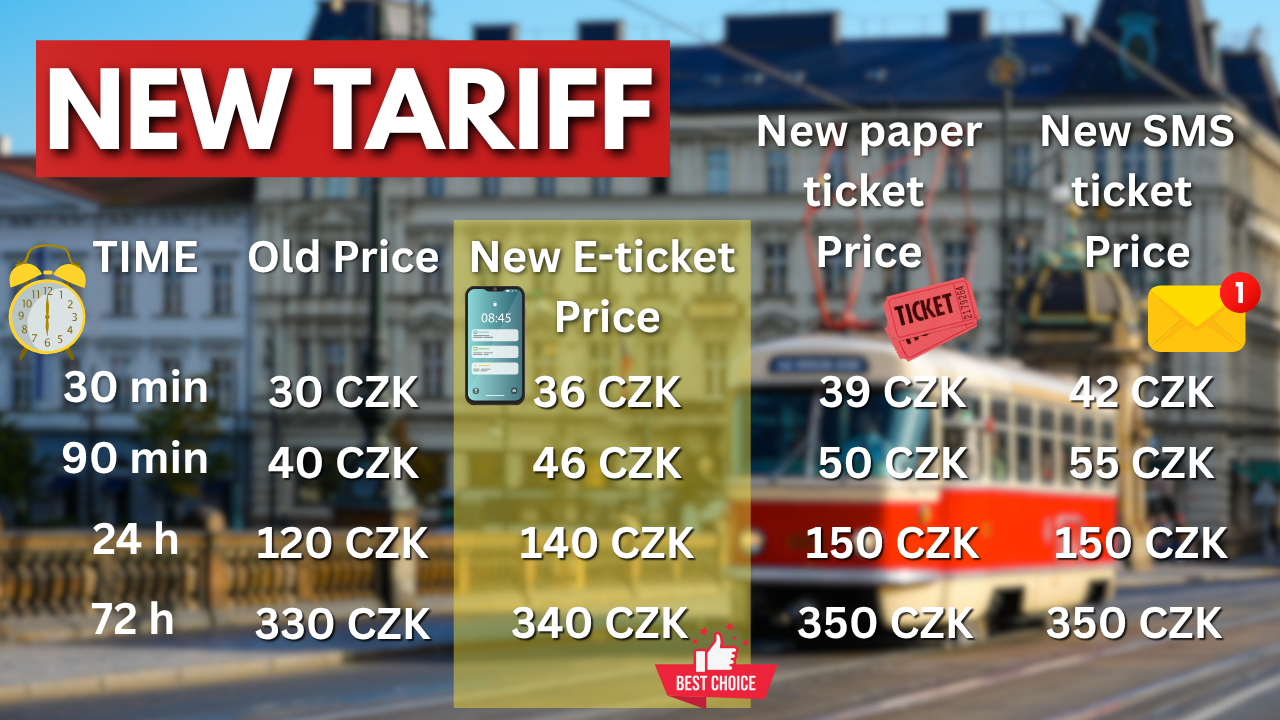
Starting January 2026, Prague's public transport fares increase significantly: paper tickets rise 25-30%, while app-based tickets climb 15-20%. The Airport Express ticket doubles from 100 CZK to 200 CZK. For visitors planning multi-day stays, these increments add measurable cost.
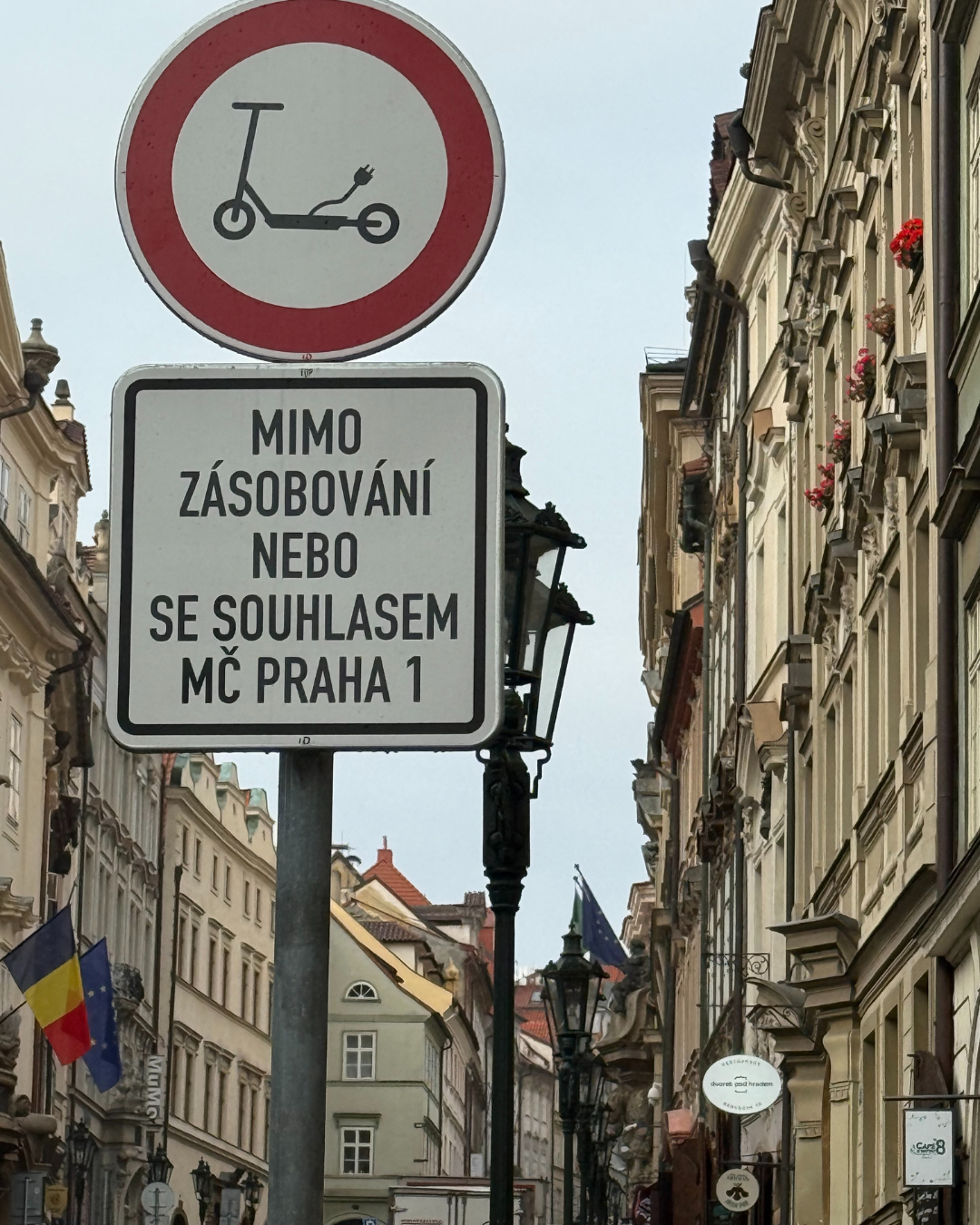
Additionally, Prague will ban shared electric scooters beginning January 2026, citing safety concerns and pedestrian injuries. The city is also implementing EU-mandated short-term rental regulations beginning May 2026, requiring hosts to register properties and acquire government registration numbers displayed on platforms like Airbnb. These changes will likely reduce available budget accommodation supply and potentially push prices upward across the guesthouse market.
On the positive side, Prague Castle's digital ticketing improves in 2026—visitors can now save e-tickets on their phones rather than printing them. The Petřín funicular is scheduled to reopen in spring 2026 following renovations, and the Prague Zoo's new Arctic pavilion will debut, adding attractions to draw visitors beyond the traditional itinerary.
Check out our Prague 2026 Travel Update
What This Means for Travelers in 2026
If you're planning a Prague trip for 2026, the city's transformation toward premium positioning directly affects how you should approach your visit. The first adjustment: abandon the assumption that Prague remains Europe's cheapest major capital. With average hotel rates now at €117 per night and public transport fares climbing 15-30%, your daily budget should align with Vienna or Budapest expectations—roughly €120-180 per day for mid-range comfort including meals and activities.
The good news is that this shift creates genuine advantages for thoughtful travelers. Fewer budget tourists means shorter queues at Prague Castle, Charles Bridge, and Old Town Square. Restaurants in historic neighborhoods increasingly abandon the "tourists-only" pricing model because they're now competing for affluent clientele who demand quality and authenticity. The city's €22 million investment in marketing premium experiences translates into better curated cultural programming, more sophisticated dining, and expanded attractions beyond the traditional circuit.
Where To Stay In Prague? Watch This Video To Find Out!
Second, explore neighborhoods beyond the historic center. Vinohrady, Holešovice, and Žižkov offer exceptional cuisine, independent galleries, craft beer bars, and authentic cultural experiences at prices substantially lower than the Old Town. A 20-minute metro ride to Vinohrady or Žižkov isn't an inconvenience—it's an economic advantage and an experience far richer than yet another photo at Charles Bridge.
Third, book accommodation well in advance. With occupancy rates exceeding 80% during peak seasons and substantial new luxury supply concentrated in Prague 1, availability tightens rapidly. This is particularly true for mid-range properties (€90-120/night) which offer the best value-to-quality ratio and sell out earliest. Early booking also locks rates before January 2026's transport price increases take effect.
❤️Where is the best place to stay in Prague?❤️
The Bottom Line
Prague's 2025 tourism boom isn't about crowds—it's about premium positioning. The city has successfully rebranded itself from a budget destination to a luxury market, attracting affluent, culturally-engaged travelers from Asia, North America, and Western Europe. Hotel investment is accelerating, prices are rising, and visitor composition is fundamentally shifting upscale.
For 2026 travelers, this means planning further in advance, budgeting for higher accommodation and transport costs, and seeking out local guides and experiences that deliver authentic alternatives to mass tourism. The Prague of 2026 will be a different city than 2025—more expensive, better curated, and increasingly oriented toward sophisticated travelers seeking authentic cultural immersion. Whether you're visiting or operating a tourism business, that transformation deserves your attention.
WRITTEN BY VALERY
Licensed Prague guide and co-creator of Real Prague Guides (50K+ YouTube subscribers). My company, 100 Spires City Tours, leads some of the highest-rated tours in Prague.
📷 Instagram: @realpragueguides
📺 YouTube: Real Prague Guides
🎫 Book a tour: tours-prague.eu
Disclaimer: This article reflects the personal opinions of the author and is not intended to discourage visitors to Prague from businesses mentioned above.