Did the Freemasons found Czechoslovakia?
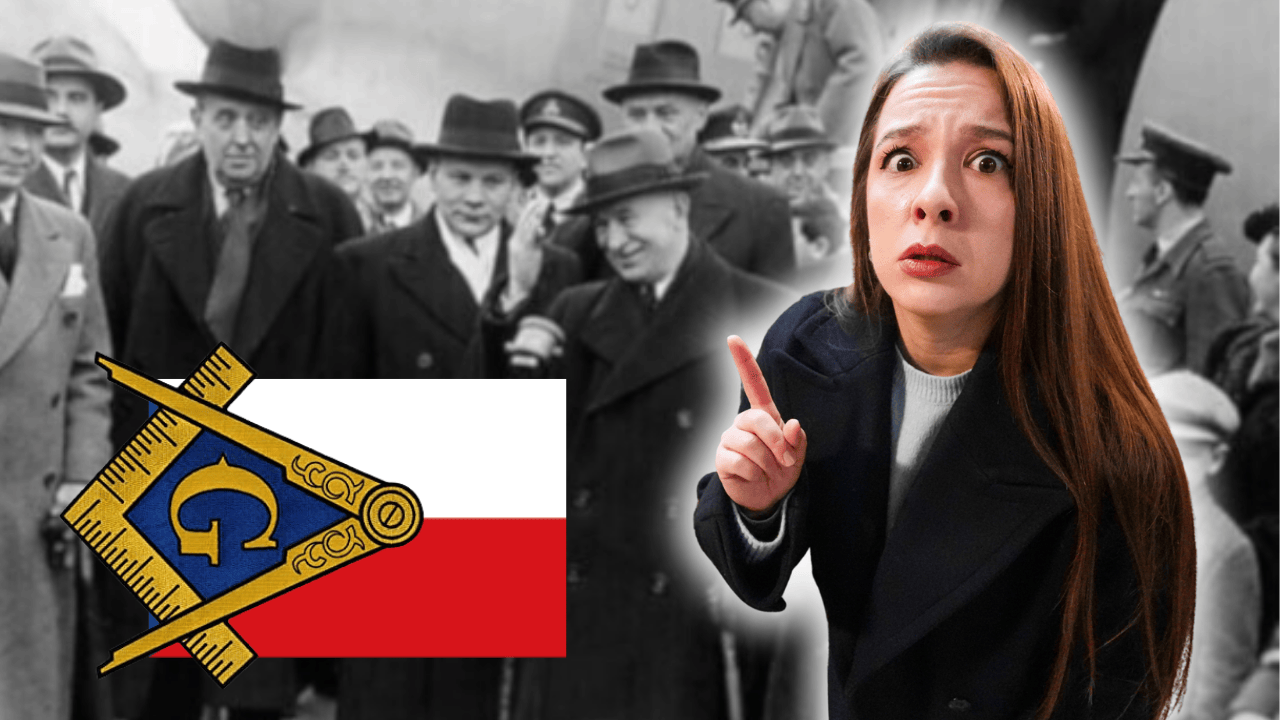
A surprising number of Czechoslovakia’s founding politicians, intellectuals, and cultural icons were Freemasons. In fact, Czechoslovak Freemasonry in the interwar period was less like a secret world‑government and more like a flamboyantly dysfunctional fraternity: full of powerful people, murky politics, ritual awkwardness, and one very famous president who almost single‑handedly blew up the whole thing from the inside.
In this article, we’ll walk through the real story behind “Masonic Prague”: the secret lodges, the scandals, the beach‑vacation‑turned‑recruitment‑pitch, and why Czech Freemasonry effectively vanished for forty years—only to reappear after the Velvet Revolution.
The first Masons in Prague
Freemasonry reached Prague already in the 1740s, under Habsburg rule, and saw a brief golden age in the late eighteenth century before being banned by Emperor Francis II in 1795. Lodges operated clandestinely for over a hundred years, which meant that by the time an independent Czechoslovakia emerged in 1918, the idea of a “secret society” was already woven into the city’s intellectual and political culture.
Today, people still spot Masonic symbols around Prague and wonder whether the whole city was some kind of secret Masonic blueprint. The short answer is no—but the real story is almost as strange: Prague really did become an international Masonic hub, with dozens of lodges, multiple grand lodges, and an astonishing number of statesmen, artists, and magnates who signed up.
The “Czech Mafia” and wartime plotting
The real drama begins at the end of World War I, when the Austro‑Hungarian Empire was crumbling and Czechoslovakia did not yet exist. In Prague, a group of nationalist liberals and resistance fighters—some of whom had been imprisoned or nearly executed by the monarchy—decided they needed a cover for their anti‑Austrian activities.
They called themselves the Mafia (after the Sicilian mafia), and soon, through an Italian spy named Ugo Dadone, they connected to the Grand Lodge in Rome. By the time the lodge was formally established, the empire had collapsed, Czechoslovakia was independent, and many former “Mafia” members were now running the new state: the Minister of Finance, the Grand Inspector of the Army, even the Chancellor to the President.
They met at Národ Lodge (later “Národ of the Czech Fraternity”) at Národní 36 in Prague, but their relationship with Masonry was… unusual. They skipped classic initiation rituals, never really “studied” the craft, and were essentially handed Masonic rights as a kind of victory‑lap trophy for their wartime resistance. To traditional Masons, this was like handing someone a doctorate in medicine without them ever opening a textbook.
The “elite” lodge: Hiram and Alphonse Mucha
While the Národ group was using Masonry as political networking and patriotic cover, another lodge in Prague took the rituals deadly seriously.
The story starts with Lodge Hiram, originally a German‑speaking lodge that later gave birth to the first Czech‑language lodge, Jan Amos Komenský (often shortened to “Jak”). Whereas the Národní‑36 crowd were mostly politicians playing at Masonry, the Jak‑type lodges attracted artists, intellectuals, and genuine enthusiasts of esoteric symbolism.
The star name here is Alphonse Mucha, the world‑famous Art Nouveau artist behind the Slav Epic and countless posters. Mucha had been a Freemason since the late 1890s, initiated in Paris in the Grand Orient, and became one of Czechoslovakia’s leading Masonic figures. After the republic was founded, he drafted statutes, translated rituals, designed emblems and diplomas, and even represented Czech lodges at international Masonic conferences.
To Masons like Mucha, the lodge was not just a gentlemen’s club but a kind of philosophical and moral school—something that stands in stark contrast to the “anything‑goes” attitude of the Národ‑style members.
The Grand Lodge of Czechoslovakia
Unsurprisingly, the two camps—political and esoteric—eventually collided. In 1923, several lodges merged under the National Grand Lodge of Czechoslovakia (NVLČs), headquartered in Prague. The provisional headquarters were initially in a relatively small building on Husova Street in the Old Town, a modest start for what was supposed to be the central hub of Czechoslovak Freemasonry.
The new Grand Lodge was, by its own admission, thoroughly bureaucratic. Members had to fill out forms, pay annual dues, and follow a labyrinth of rules—far from the image of shadowy, untouchable conspirators. And many of the “brothers” were exactly who you’d expect: upper‑middle‑class professionals, politicians, lawyers, doctors, and artists.u3h0.
Yet even this supposedly elite milieu had its problems: some lodges fell into debt, membership was patchy, and ritual discipline was often poor. The “Masonic wonder” of interwar Czechoslovakia was less an awe‑inspiring secret network and more a chaotic, overheated club scene.
The Benes case: politics and scandal
The most famous Masonic‑related scandal of the era revolves around Edvard Beneš, who served as Minister of Foreign Affairs, Prime Minister, and eventually President of Czechoslovakia. Beneš was never a Mason during his early revolutionary years (he was part of the “Mafia” political circle), but he had long been surrounded by Freemasons.
In the summer of 1926, burned out and taking a vacation on the island of Port‑Cros in southern France, he struck up a conversation with his secretary, Jiří Sedmík, who was a recently initiated Freemason. Sedmík preached the “craft” to his boss, and Beneš eventually said he wanted to join. The story is both charming and slightly absurd: the future president of the republic deciding to enroll in a secret society while sunbathing on a Mediterranean island.
When the pair returned to Prague, Sedmík told the lodge that Beneš wanted in. Some members were thrilled: a sitting star politician would bring prestige and donations. Others were horrified, fearing that Beneš would turn the lodge into a de facto political branch of government.
Beneš was accepted under the promise that he would keep his politics outside the lodge. He lasted approximately as long as most people last in a yoga‑and‑meditation class: he got bored, complained about fellow members, and then committed what many Masons saw as one of the biggest faux pas in interwar Czechoslovak Freemasonry.
He gave a high‑profile speech at Harmonia, a German‑nationalist Masonic lodge on Nekazanka Street, broadly supportive of the German minority in Czechoslovakia. To Czech‑leaning Masons and the public, it looked like the captain of Sparta Prague showing up at a match in a Slavia shirt. Catholic circles were especially scandalized, given the Church’s long‑standing ban on Freemasonry and its treatment of Masonic membership as a mortal sin.
The backlash was immediate. Beneš embarrassed the lodges, damaged their reputation among the religious electorate, and reignited fears that the whole organization was being instrumentalized for politics.
Naming the lodge: truth, lies, and Masaryk
The Masaryk family adds another layer of absurdity. Masons once asked whether they could name a new lodge after the first president, Tomáš Garrigue Masaryk. Beneš told them Masaryk was fine with that. When a representative checked with the presidential office, the answer was different: the president had never given such permission.
Whether Beneš was exaggerating, misinformed, or deliberately misleading, the episode became a minor crisis. The compromise was to name the lodge Pravda Vítězí (“Truth Prevails”), Masaryk’s own motto. Even more ironically, the Masaryks themselves were already in the lodge: President Masaryk was never initiated, but he was revered as a “Freemason without a ribbon,” while his son Jan Masaryk was an actual Mason.
Chaos, rituals, and the coffin problem
For all the glamour in history, most of Czechoslovak Freemasonry was not sinister but strangely mundane. Many members skipped meetings, dodged dues, and actively avoided certain rituals—especially the ones that involved lying in a coffin or other theatrical, quasi‑funerary symbolism.
In theory, Masonic rituals are like stage plays: each member learns lines, cues, and choreography. In practice, many lodges were full of men who could barely remember their parts, “messed up” the ceremonies, and complained that the whole thing was awkward or outdated.u3h0.webnode+1
Amid all this, a small but passionate minority kept the tradition alive. Figureheads such as Alphonse Mucha and the architect‑developer Václav Havel Sr. (father of the future president) were wired differently: they were drawn to the occult, symbolism, and esoteric experience.
Havel’s family hosted séances in their home; Mucha reportedly tried to “speak with the dead” in his spare time. For personalities like these, the theatrical rituals of Freemasonry were not empty spectacle but a kind of psychological theater that tapped into something deeper than politics or social climbing.
Hunting for a temple: Klarov, Smíchov, and the “Memorial‑by‑day” plan
Masonic meetings in interwar Prague happened in apartments, cafés, and pubs—places like the Holland Café on Paris Street and Havel’s own Lucerna Palace. But serious Masons wanted a proper temple. You don’t don a colorful apron and perform symbolic dramas in a borrowed boarding‑house sitting room.
Václav Havel Sr. and his Masonic brothers planned to build a true temple at Klarov in Prague. The public justification for buying the land, however, was to construct a memorial to Jan Amos Komenský, the enlightened philosopher after whom the main lodge was named. The idea was that by day it would be a monument to Czech‑national Enlightenment ideals; by night, a Masonic lodge.
Other Masons smelled profiteering and suspected that the “memorial” front was a cover for real‑estate speculation. The project collapsed, and the temple was ultimately built in Smíchov, on what is now a vanished street (Divisova). It opened on 7 March 1936, the birthday of President Masaryk, in a grand ceremony that felt like the high point of Czechoslovak Freemasonry.
The Nazi shadow and voluntary dissolution
The euphoria did not last long. In 1935, Adolf Hitler outlawed German Masonic lodges, and news of the persecution slowly trickled into Prague. Although Czech‑language lodges were not immediately targeted, the atmosphere became increasingly tense. Freemasons were nervous, meetings were smaller, and the sense of being under surveillance grew.
By 1938, fearing raids, confiscations, and worse, the Czechoslovak lodges chose to disband themselves. This step was voluntary, at least in the formal sense, but it took place against the backdrop of Nazi expansion and the looming occupation.
The situation during the Second World War was complicated: some Czech lodges did suffer raids and harassment, but persecution was never as systematic as in parts of Germany or Austria. One reason may be that Czech Freemasonry was not heavily Jewish, and some members still held positions tolerated by the Nazi‑installed regime.
A notable example is Hugo Vavrečka, head of the Bata Shoe Company under the Protectorate, who was also a Mason and a relative of the future president Václav Havel. Havel’s father, himself a prominent Mason, also managed to survive the occupation with relatively few consequences, despite his past.
Alphonse Mucha’s final days
Not everyone was so fortunate. Alphonse Mucha, the towering artist and Mason, was interrogated by the Gestapo in 1939 while gravely ill. He never fully recovered and died a few months later. Whether the interrogation was specifically over his Freemasonry remains unclear; some historians attribute it to broader political surveillance, while others believe his Masonic ties were a factor.
The grim irony is that one of Czechoslovakia’s most visually iconic creators—whose posters and murals helped define the national image—was ultimately broken by the regime that saw any “secret society” as a threat, even if that society was mostly bad at keeping secrets.
Exile, London, and the mysterious donations
During the war, many leading Czechoslovak politicians, including Edvard Beneš and Jan Masaryk, lived in exile in London. There, they opened a provisional Comenius Lodge (named after Jan Amos Komenský), keeping the Masonic flame alive abroad.
When the war ended and Beneš returned to resume the presidency, something strange began to happen. Czech lodges had technically been dormant since 1938, but suddenly they started receiving large donations from abroad: from the Grand Lodge of Louisiana, other Masonic associations, and even a personal gift of 700,000 crowns from John Henry Cowles, one of the highest‑decorated Freemasons in the world at the time.
In total, around 1.2 million crowns flowed into the closed Czechoslovak lodges, much of it routed through President Beneš, even though he was no longer an active member. The exact purpose of these funds and the channels used remain murky, adding another layer of intrigue to the story.
Communism, transparency, and the 40‑year hiatus
With the war over, the lodges reopened in a new building at Valentinská Street in Prague, occupying several apartments on the first floor. This became the last known Masonic temple in Prague before the Communist coup of 1948.
The new regime demanded full transparency: financial records, membership lists, and organizational details. Freemasons, who had long insisted they were “not a secret society, but a society with secrets,” were reluctant to hand over such information.u3h0.
Under pressure from the secret police, apartment raids, and the broader climate of the show trials, the lodges limped on until 1951, when they finally shut down “for better days,” hoping the Communist regime would eventually pass.
It did not pass quickly. Freemasonry remained officially absent for forty years, surviving only in scattered memories, private conversations, and a few underground contacts.u3h0.
The Velvet Revolution and the return of the brothers
The rebirth of Czech Freemasonry came with the Velvet Revolution of 1989 and the broader opening of civil society. Civic Forum and other groups created space for religious and philosophical associations, including Masonic lodges.
New lodges emerged, veterans reconnected with long‑lost brothers, and once‑secret meeting rooms slowly shed their decades‑old dust. The people who returned were not the same as the interwar elite—many of the original faces had long since passed—but the principle of fellowship, ritual, and symbolic work came back into public life.u3h0.
So, was Czechoslovakia founded by the Freemasons?
In the end, the answer is neither “no” nor “yes,” but something in between. Czechoslovakia was not secretly founded by the Freemasons, in the sense of a centralized, shadowy conspiracy. However, an unusually high proportion of the founding political and cultural elite were Freemasons, and the lodges functioned as a kind of informal network for liberal, Western‑leaning, often anti‑clerical figures.
What sinks the classic conspiracy‑theorist image is the sheer disorganization of the scene: members who skipped meetings, hated rituals, couldn’t memorize their lines, and bickered over money and real estate. The most famous member, President Beneš, embarrassed the lodge.