

Medieval Prague: 6 Historic Landmarks That Bring the Middle Ages to Life
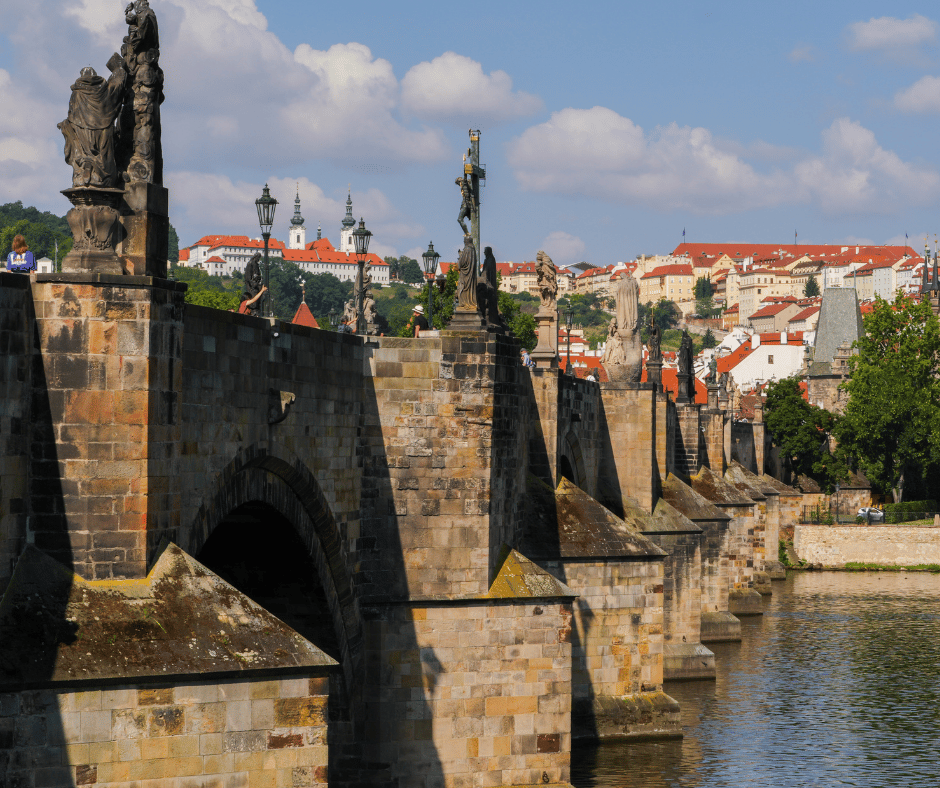
Prague is one of Europe’s most remarkable destinations for medieval history, known for its Gothic cathedrals, historic bridges, ancient synagogues, and beautifully preserved Old Town. Unlike many European capitals that underwent extensive reconstruction, Prague retains much of its historic character, allowing visitors to explore centuries of architecture and history on foot.
From the magnificent Prague Castle complex to the world-famous Astronomical Clock, the city offers countless opportunities to discover what life was like in medieval Bohemia.
Whether you’re interested in medieval architecture, the reign of Charles IV, or the everyday lives of Prague’s medieval residents, these six historic landmarks are an excellent place to begin exploring the city’s past.
In this guide, we’ll cover the best medieval sites in Prague, explain their historical significance, and share practical tips to help you plan your visit.
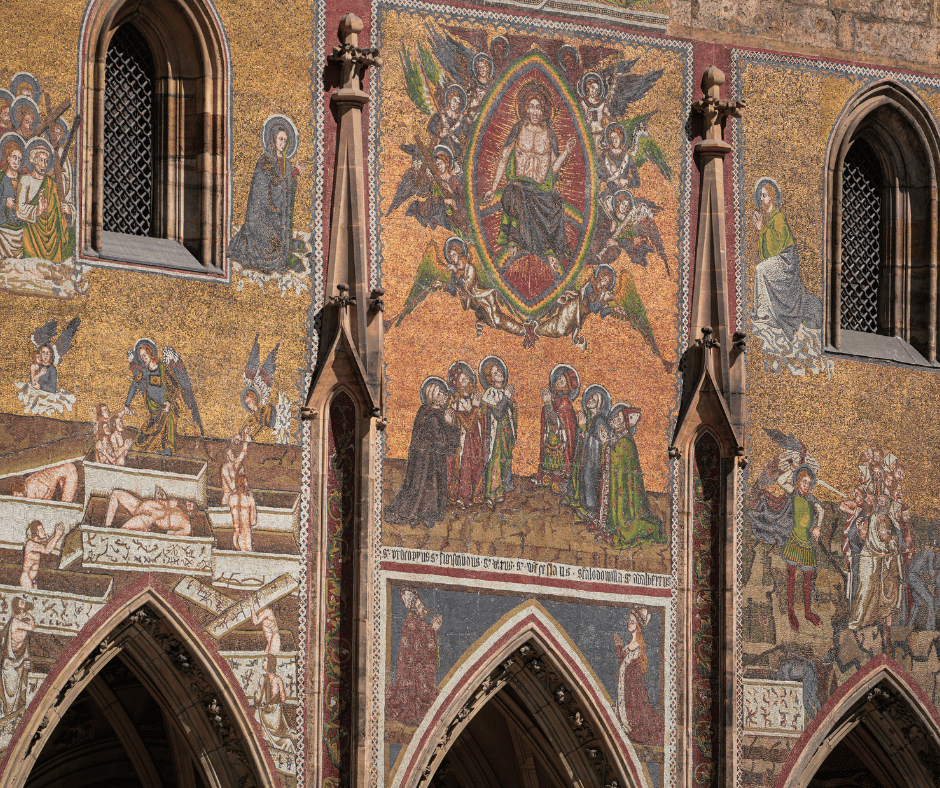
Prague’s Medieval Golden Age: The Legacy of Charles IV
Prague’s medieval golden age is closely associated with Charles IV, King of Bohemia and Holy Roman Emperor, who ruled during the 14th century. His reign transformed Prague into one of the most important political, religious, and cultural centres in Central Europe.
Charles IV was not only a powerful ruler but also an ambitious patron of architecture, education, and urban development. Under his leadership, Prague expanded dramatically, with new religious buildings, improved infrastructure, and entire neighbourhoods reshaping the city.
His most significant contributions included:
Charles Bridge: Construction began in 1357, creating a vital connection between Prague’s Old Town and the Lesser Town.
Prague Castle: The royal complex underwent major development, including work on St. Vitus Cathedral.
New Town (Nové Město): Founded in 1348, this ambitious urban expansion provided space for Prague’s growing population and commerce.
Charles University: Established in 1348, it became the first university in Central Europe.
Gothic architecture: Churches, monasteries, fortifications, and other monumental structures flourished during his reign.
These developments helped establish Prague as a major European capital and left a lasting architectural legacy. Many of the city’s most recognisable medieval landmarks can be traced to this period or to the generations that followed.
Today, exploring medieval Prague offers a chance to see how the ambitions of its rulers, the influence of the Church, and the activities of merchants and craftspeople shaped the historic city.
The 6 Best Medieval Landmarks in Prague
1. St. Vitus Cathedral: A Gothic Masterpiece Inside Prague Castle
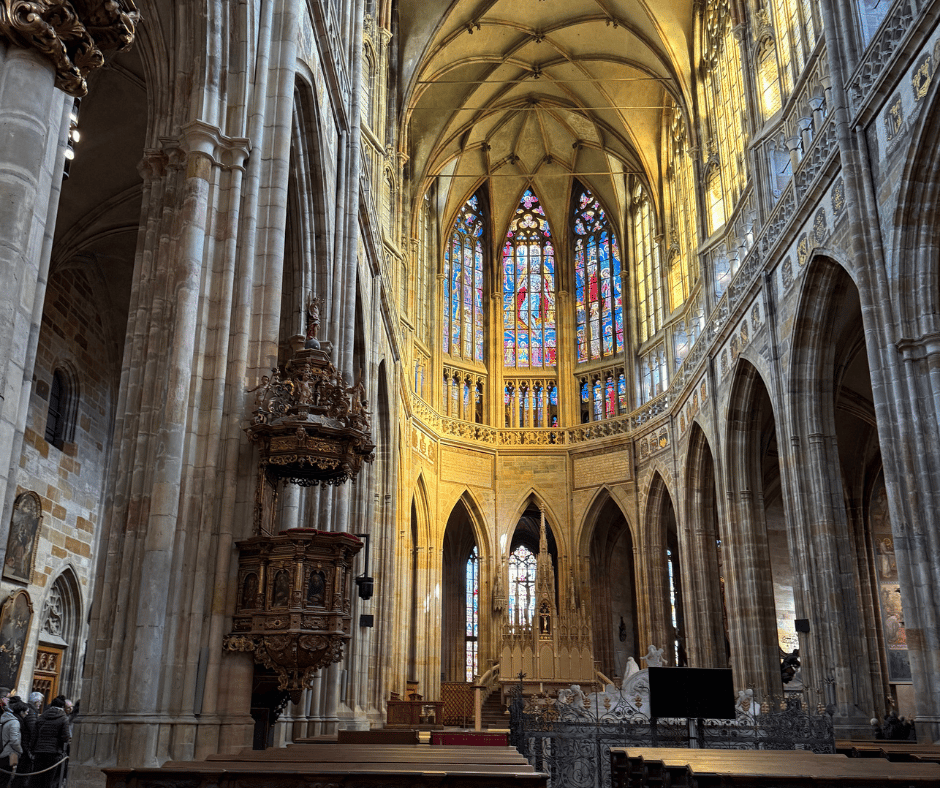
St. Vitus Cathedral is one of Prague’s most important medieval landmarks and a defining example of Gothic architecture in Central Europe. Located within Prague Castle, the cathedral has served as a religious centre, coronation church, and burial place for Bohemian kings and other important historical figures.
Construction began in 1344 under Charles IV. French architect Matthias of Arras initiated the project, and Peter Parler later continued the work, introducing architectural innovations that helped define the cathedral’s distinctive appearance. Although construction continued for centuries, its medieval foundations remain central to its identity.
Look for the soaring vaulted ceilings, intricate stonework, richly decorated chapels, and impressive stained-glass windows. The cathedral also houses the Chapel of St. Wenceslas, dedicated to the patron saint of Bohemia.
Why visit?
Discover one of the most significant Gothic buildings in Prague.
Learn about the kings, saints, and religious traditions that shaped Bohemian history.
Enjoy panoramic views of Prague from the cathedral tower, when open to visitors.
Visitor tip: Access arrangements and ticket requirements vary depending on the areas you want to visit. Check current Prague Castle admission information before your trip.
You can explore the cathedral and its historical setting on a guided Prague Castle Free Walking Tour by 100 Spires City Tours. Visit the interiors of the Prague Castle on a Complete Prague Castle tour.
2. Charles Bridge: Prague’s Iconic Medieval Crossing
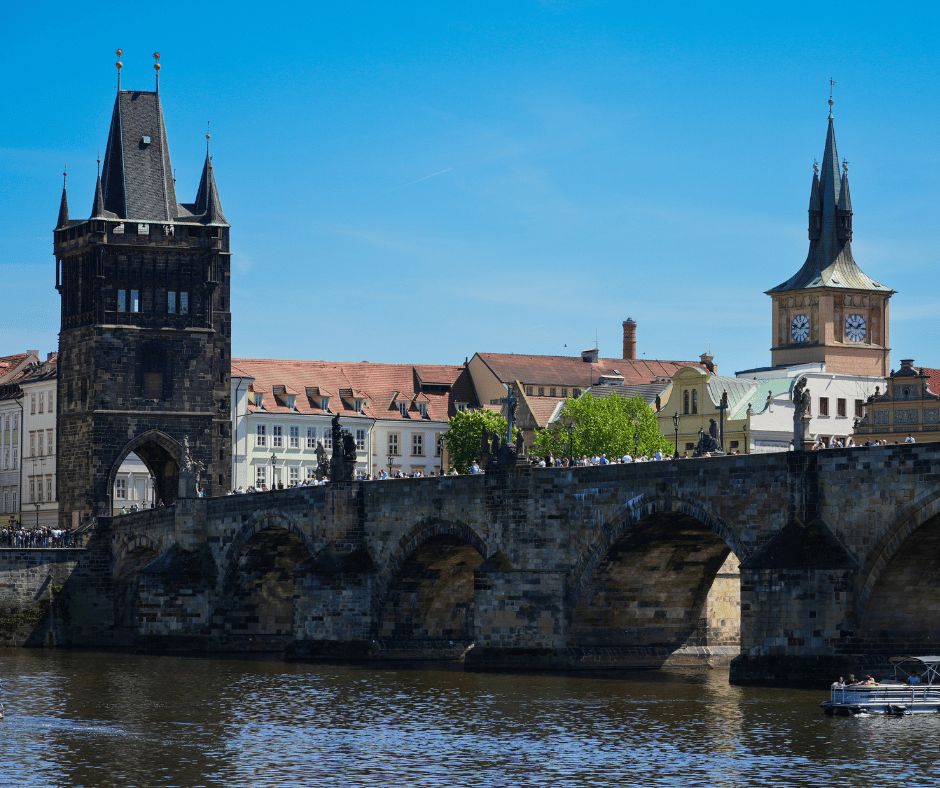
Charles Bridge is one of the most recognisable sights in Prague and an essential stop for anyone interested in medieval history.
Commissioned by Charles IV, construction began in 1357, and the bridge was completed in the early 15th century. Designed to connect the Old Town with the Lesser Town, it became an important route for trade, travel, and royal processions.
The bridge is now famous for its rows of statues, many of which were added during the Baroque period centuries after its medieval construction. In its original medieval form, the bridge did not have the familiar collection of statues seen today.
Its towers also reveal different chapters of Prague’s architectural history:
Old Town Bridge Tower: A remarkable Gothic gateway completed in the late 14th century.
Lesser Town Bridge Towers: A pair of towers reflecting different periods of construction.
Judith Bridge remains: Elements of the earlier Romanesque bridge survive in the area, offering clues to the crossing that preceded Charles Bridge.
Why visit?
Experience one of Prague’s most famous medieval structures.
Admire Gothic towers and views of Prague Castle.
Discover how the bridge connected important commercial and royal districts.
Visitor tip: Early morning is often the best time to enjoy the bridge with fewer crowds. Look closely at the stonework and towers to appreciate details that are easy to miss during a busy visit.
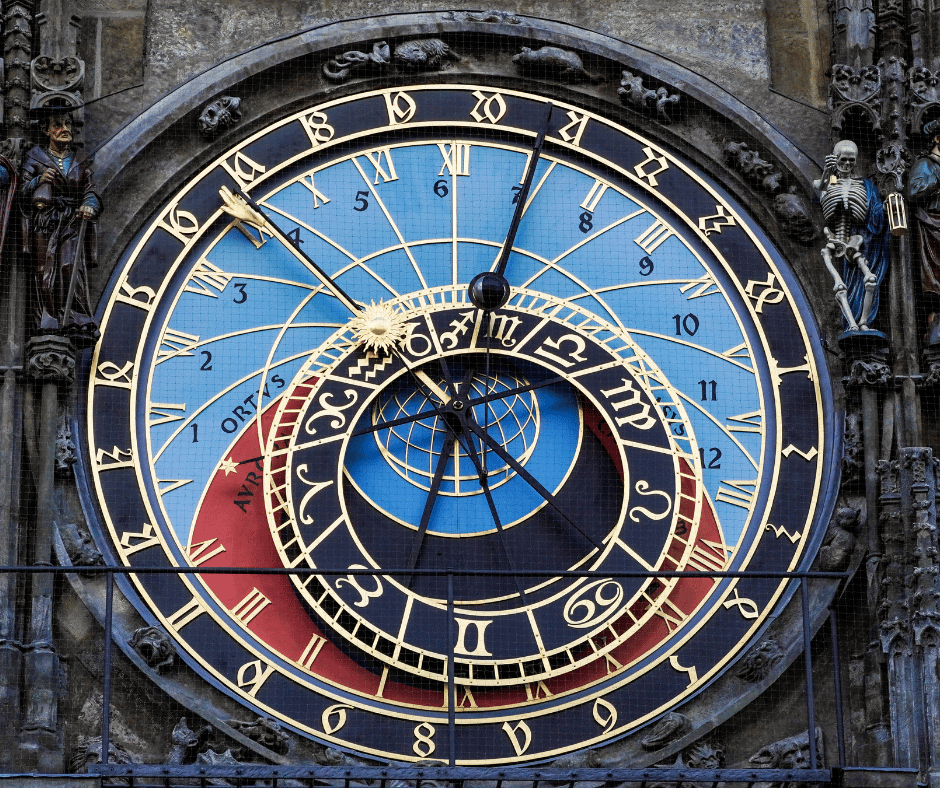
3. Prague Astronomical Clock: A Medieval Engineering Wonder
Situated on the Old Town Hall in Prague’s historic Old Town Square, the Prague Astronomical Clock, known locally as the Pražský orloj, is one of the city’s most celebrated historical attractions.
Installed in 1410, the clock is widely recognised as the oldest astronomical clock still in operation. It combines timekeeping with astronomical information, displaying the positions of the Sun and Moon, zodiac symbols, and other features that reflect medieval understandings of the heavens.
The clock’s animated figures and hourly procession of the Twelve Apostles have become a familiar sight for visitors from around the world.
The mechanism has been repaired and modified over the centuries, but it remains a fascinating example of medieval craftsmanship and astronomical knowledge.
Why visit?
See an extraordinary surviving example of medieval technology.
Explore the astronomical dial and its symbolic details.
Discover the history of the Old Town Hall and the surrounding square.
Visitor tip: Arrive a few minutes before the hourly performance if you want a good viewing position. The spectacle is brief, and the square can become crowded. Check the current schedule before visiting, as maintenance or special circumstances can affect the display.
You can discover the clock’s history and other Old Town landmarks on the Welcome to Prague Free Walking Tour by 100 Spires City Tours.
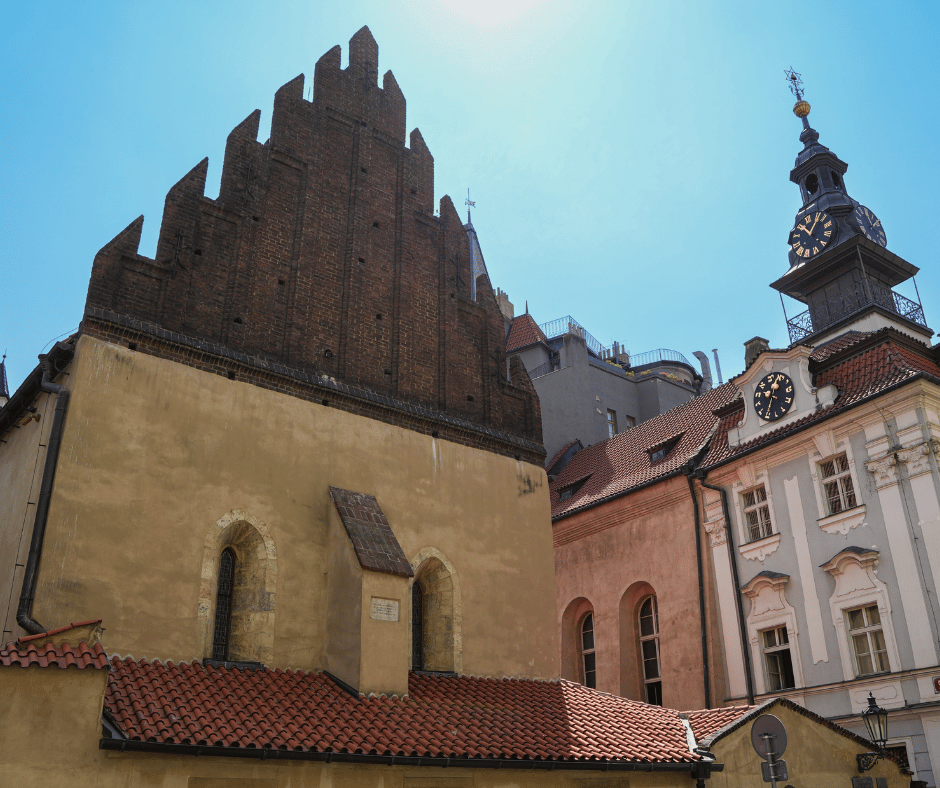
4. Old New Synagogue: A Remarkable Survivor of Medieval Jewish Prague
The Old New Synagogue, known in Czech as the Staronová synagoga, is one of the most important surviving Jewish heritage sites in Prague.
Dating to around 1270, it is among the oldest surviving synagogues in Europe and remains an active place of worship. Its simple yet striking Gothic architecture reflects the importance of Prague’s Jewish community during the Middle Ages.
The synagogue stands in Josefov, Prague’s historic Jewish Quarter, an area shaped by centuries of religious life, scholarship, cultural achievement, and periods of persecution.
Its unusual name has inspired several explanations. One traditional interpretation connects it to the idea of a new synagogue built alongside an older one, although the precise origins of the name remain uncertain.
Inside, the building preserves a distinctive medieval atmosphere, with Gothic vaulting and furnishings associated with centuries of Jewish religious tradition.
Why visit?
Discover one of Prague’s oldest surviving religious buildings.
Learn about the history of the city’s Jewish community.
Explore the architectural and cultural heritage of Josefov.
Visitor tip: Check opening hours, admission arrangements, and religious holiday closures before visiting. If you plan to explore several Jewish heritage sites, consider how the synagogue fits into your wider itinerary.
The Old New Synagogue is also an important reminder that medieval Prague was shaped by different religious and cultural communities, each contributing to the city’s history.
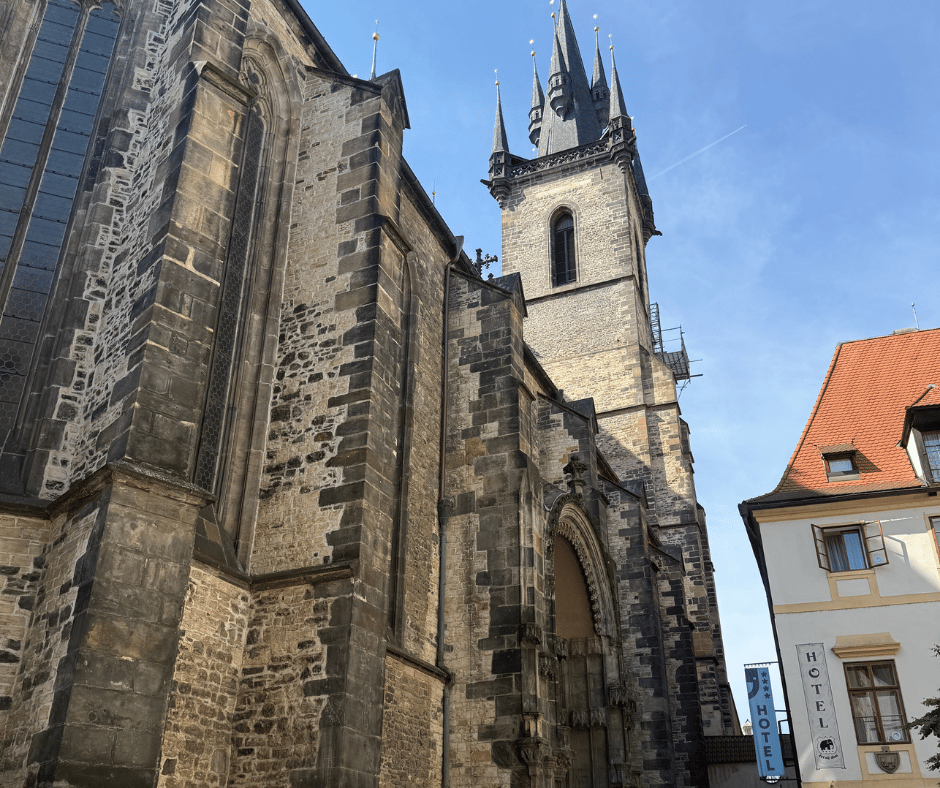
5. Church of Our Lady Before Týn: A Gothic Icon of Prague’s Old Town
The Church of Our Lady Before Týn (Týnský chrám) is one of Prague’s most recognisable medieval landmarks. Its dramatic Gothic towers rise above Old Town Square, creating one of the city’s most famous skylines. With its rich history, striking architecture, and connection to medieval Prague, the church is a must-see for anyone exploring the city’s historic centre.
Although a church stood on this site before the present building, construction of the impressive Gothic structure began in the 14th century. Its development continued into the 15th century, during a period when Prague was becoming an important political, commercial, and religious centre in Central Europe.
The church played a significant role during the Hussite period, when religious reform movements profoundly influenced Bohemian society. For a time, it became an important centre for the Hussite community in Prague. Its history reflects the religious and political changes that shaped the city during the late Middle Ages.
Look up at the church’s distinctive twin towers, which rise approximately 80 metres above Old Town Square. Although they appear symmetrical from a distance, their details differ, adding to the building’s unique character. Inside, visitors can discover historic religious artwork, Gothic architectural features, and the tomb of astronomer Tycho Brahe.
Visitor tip: The church’s entrance is located through the buildings surrounding Old Town Square, so it can be easy to overlook. Opening hours may vary depending on religious services and other events, so check the visiting arrangements before you go.
The Church of Our Lady Before Týn is an essential stop for anyone interested in medieval Prague. Its imposing towers, historic setting, and connection to the city’s religious past make it a fascinating landmark to discover on a walk through the Old Town.
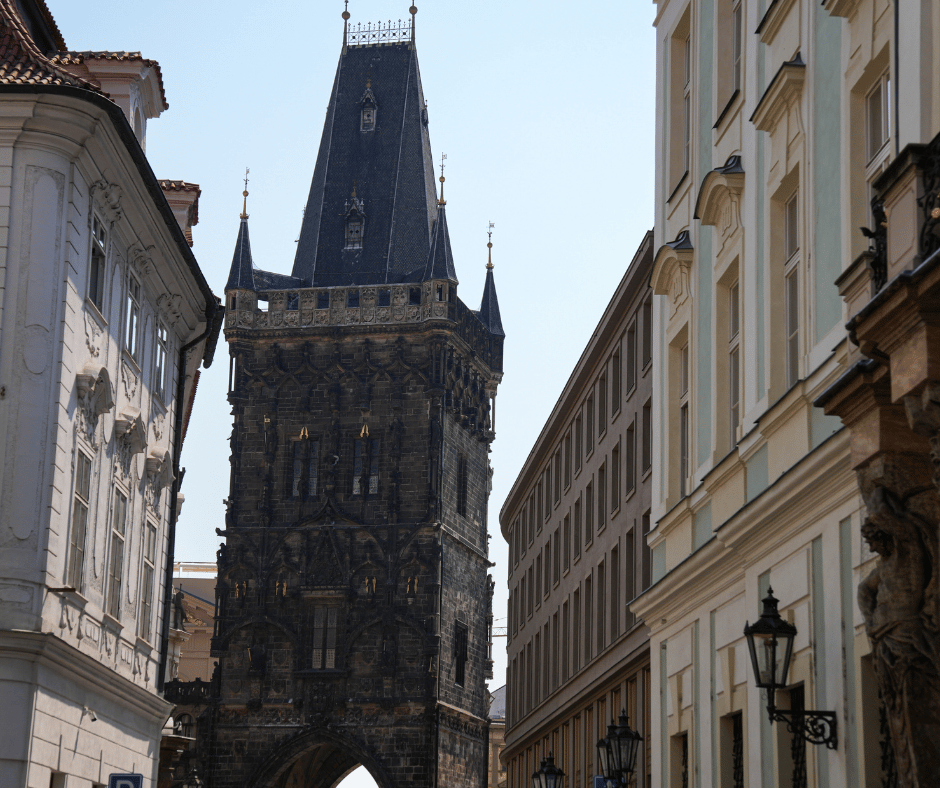
6. Powder Gate: A Monumental Gateway to Medieval Prague
The Powder Gate (Prašná brána) is one of Prague’s most important Gothic monuments and a surviving reminder of the city’s medieval fortifications. Located between Republic Square and the Old Town, this imposing tower once formed part of the entrance to the historic city and marked the beginning of the traditional Coronation Route taken by Bohemian kings.
Construction began in 1475 during the reign of King Vladislav II. The tower was intended to serve as a monumental entrance to the Old Town, replacing an older city gate. Its elaborate Gothic design reflected Prague’s royal ambitions and the importance of ceremonial entrances in medieval European cities.
Although the tower was not completed entirely as originally intended, it became a prominent feature of Prague’s historic centre. Its name, Powder Gate, dates from a later period when the structure was used to store gunpowder.
The tower’s richly decorated exterior features intricate stone carvings, including figures of kings, saints, and other symbolic details. These decorations offer insight into the artistic traditions and royal imagery of late medieval Bohemia.
The Powder Gate also marks the starting point of the Coronation Route, along which future Bohemian kings travelled through the Old Town towards Prague Castle. Walking beneath its Gothic arch offers a sense of how visitors and rulers entered the historic city centuries ago.
Visitor tip: If you want to see Prague from a different perspective, check whether the tower is open for visits to its viewing gallery. Climbing the tower offers elevated views of the Old Town and its surrounding historic buildings.
This is where 100 Spires City Tours start their Welcome to Prague walk.
What Was Life Like in Medieval Prague?
Prague’s medieval landmarks reveal the ambitions of emperors and the influence of religious institutions, but they also offer clues about the everyday lives of the people who lived in the city. Medieval Prague was a growing urban centre where merchants, craftspeople, scholars, clergy, and labourers worked within a network of markets, workshops, churches, and residential streets. Here are three fascinating aspects of medieval life to look out for as you explore the city.
Narrow Streets and Historic Neighbourhoods
Parts of Prague’s Old Town and Lesser Town preserve the street patterns of earlier centuries. Although buildings and streets have changed over time, the compact lanes and irregular layouts help visitors imagine how people moved through the medieval city. Market squares and major thoroughfares were important centres of commerce, while smaller streets connected homes, workshops, churches, and courtyards.
Medieval Fortifications and City Defences
Prague’s historic districts developed alongside defensive walls, gates, and fortified structures. These helped protect important settlements and controlled movement into and out of the city. Some historic fortifications and remnants survive today, while other sections have been absorbed into later urban development. Exploring Prague’s surviving towers, gates, and castle defences offers insight into how the medieval city protected its people and institutions.
Property, Trade, and Everyday Business
Medieval Prague had a sophisticated urban economy. Property could be transferred, inherited, rented, and used in financial arrangements, while merchants and craftspeople operated within established legal and commercial systems. Written records from the period provide evidence of property transactions and credit arrangements, revealing a society with far more complex economic relationships than many visitors might expect. These details bring a different perspective to Prague’s history: beyond its kings and monuments, the city was also a place where ordinary people built homes, earned livelihoods, and navigated the opportunities and challenges of urban life.

Explore Medieval Prague on a Walking Tour
Reading about Prague’s medieval history is a great starting point, but exploring its historic streets with a knowledgeable guide can bring the stories to life.
A walking tour can help you understand how the city developed, why its landmarks matter, and how different historical periods shaped the Prague you see today.
100 Spires City Tours offers walking experiences for visitors who want to discover Prague’s history and architecture. The Welcome to Prague Free Walking Tour is one option to consider for exploring the historic centre, including landmarks such as Charles Bridge and the Astronomical Clock. Visitors interested in the castle district can also look into a dedicated Prague Castle tour.
Prague’s Medieval Underground: Discover the City Beneath the Streets
Prague’s medieval history is visible not only in its Gothic towers, churches, and cobbled streets but also in the historic cellars and vaulted rooms preserved beneath parts of the Old Town.
Many of these spaces developed as part of ordinary medieval buildings, including houses, shops, and commercial premises. Changes in street levels and centuries of urban development have left some of these original rooms below the level of today’s streets, offering a fascinating glimpse into how Prague evolved over time.
However, it is important to distinguish historical facts from popular myths. Prague does not have a single, interconnected system of medieval underground tunnels beneath the city. Its underground heritage consists of individual cellars, vaulted chambers, archaeological remains, and other spaces with different histories and purposes.
These historic spaces offer a different perspective on medieval urban life, revealing how buildings were constructed, how merchants and residents used their properties, and how the city changed over the centuries.
Curious to learn more? Read our guide, [Prague’s Medieval Underground: Know Before You Go] [insert article link], to discover the history of Prague’s underground cellars, separate historical evidence from common myths, and find out what to expect when visiting these fascinating spaces.
Frequently Asked Questions About Medieval Prague
What are the best medieval sites to visit in Prague?
Some of Prague’s most notable medieval landmarks include St. Vitus Cathedral, Charles Bridge, the Astronomical Clock, the Old New Synagogue, St. Agnes Convent, and the Church of Our Lady Beneath the Chain. Together, they illustrate the city’s royal, religious, architectural, and cultural history.
When was Prague’s medieval golden age?
Prague experienced a major period of growth during the 14th century, particularly under Charles IV, who ruled as King of Bohemia and Holy Roman Emperor. His reign saw the founding of Charles University, the establishment of New Town, and major building projects at Prague Castle and elsewhere in the city.
Is Prague a good city for medieval architecture?
Yes. Prague preserves a rich variety of medieval architecture, including Gothic churches, bridge towers, historic religious buildings, and sections of its medieval street layout. Many major landmarks are located within walking distance of one another in the historic centre.
Can you explore medieval Prague on foot?
Yes. Many of Prague’s best-known medieval landmarks can be explored on foot, particularly in the Old Town, Josefov, the Lesser Town, and the Prague Castle district. A guided walking tour can help you understand the historical connections between the sites.
Is Charles Bridge medieval?
Yes. Charles Bridge was commissioned by Charles IV, with construction beginning in 1357. It was completed in the early 15th century and remains one of Prague’s most important medieval structures. Its familiar statues were added much later, primarily during the Baroque period.
What is the oldest medieval landmark in Prague?
There is no single answer because Prague contains several buildings and structures with medieval origins. The Old New Synagogue dates to around 1270, while St. Agnes Convent was founded in the 1230s. Both are important surviving examples of the city’s early medieval architectural and religious heritage.
WRITTEN BY VALERY
Licensed Prague guide and co-creator of Real Prague Guides (50K+ YouTube subscribers). My company, 100 Spires City Tours, leads some of the highest-rated tours in Prague.
📷 Instagram: @realpragueguides
📺 YouTube: Real Prague Guides
🎫 Book a tour: tours-prague.eu