

Prague Scams: What’s Real, What’s Old, and What’s Just Misunderstood (2026 Update)

If you’ve been researching a trip to Prague, chances are you’ve come across dozens of videos and articles warning about scams. And yes — for years, stories about overcharging taxi drivers, shady currency exchanges, and sneaky “helpful strangers” have been floating around the internet.
But how many of these scams are still around in 2026? Which ones have finally disappeared? And what things do tourists often mistake for scams but actually aren’t?
Let’s break down the most common Prague scams — the ones that still exist, the ones that have faded into history, and a few confusing situations that deserve some clarification.
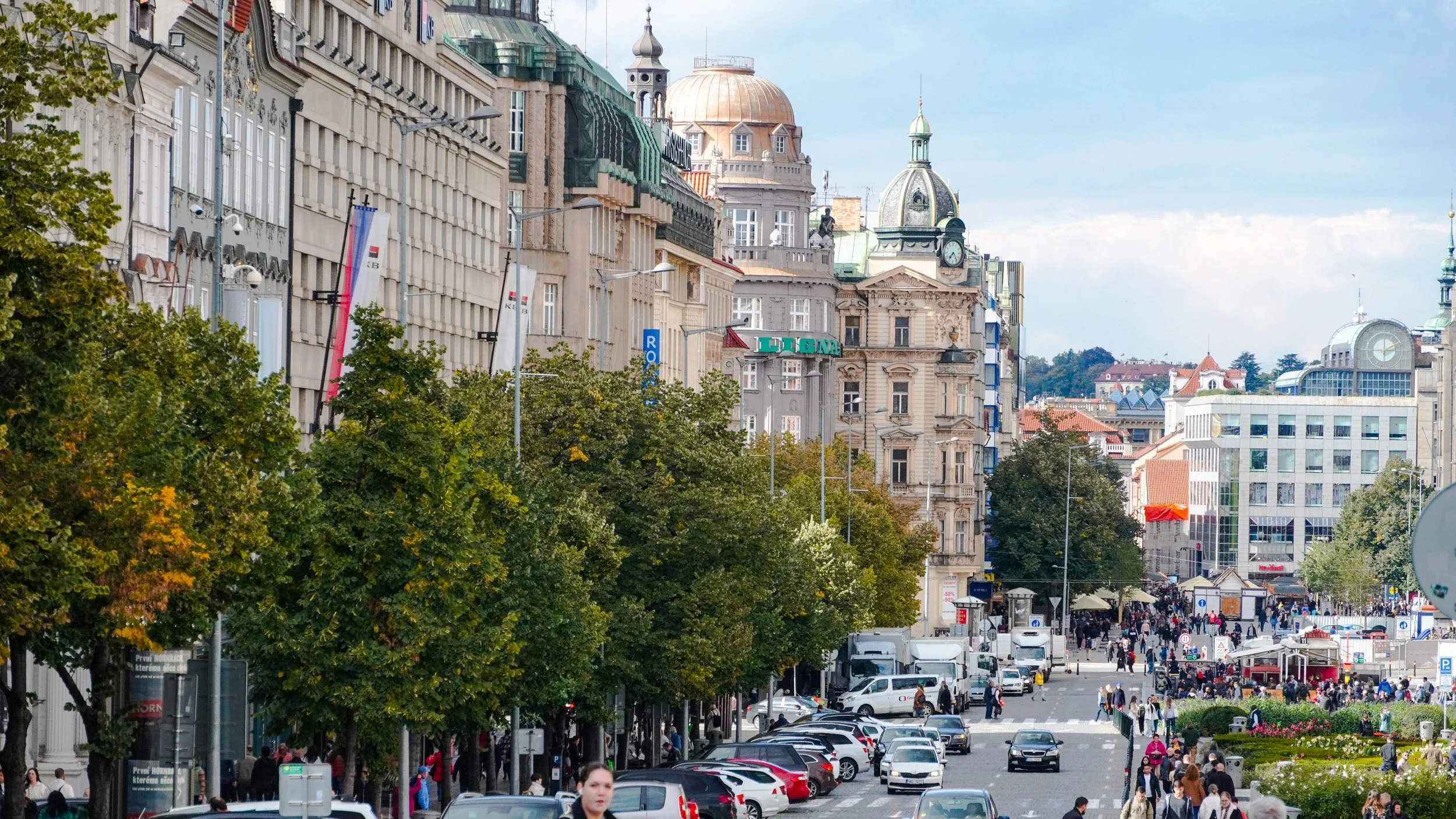
The Infamous Taxi Scam — Mostly Dead
Once upon a time, the Prague taxi scam was legendary. The story goes back to around 2012, when investigative journalist Conor Woodman exposed how some taxi drivers were charging tourists four times the normal rate.
Fast forward to today: ride-hailing apps like Uber, Bolt, and Liftago have nearly wiped out this scam.
You’ll rarely see tourists hailing cabs on the street anymore — locals certainly don’t. If you stick to Uber or Bolt, you’ll know the price before you even step into the car. So while the taxi scam was once the king of all Prague traps, it’s now practically extinct.
🚨🚕🚨The only places teeming with these old-school crooks are the Main Train Station and the Airport parking lots, so be vigilant!
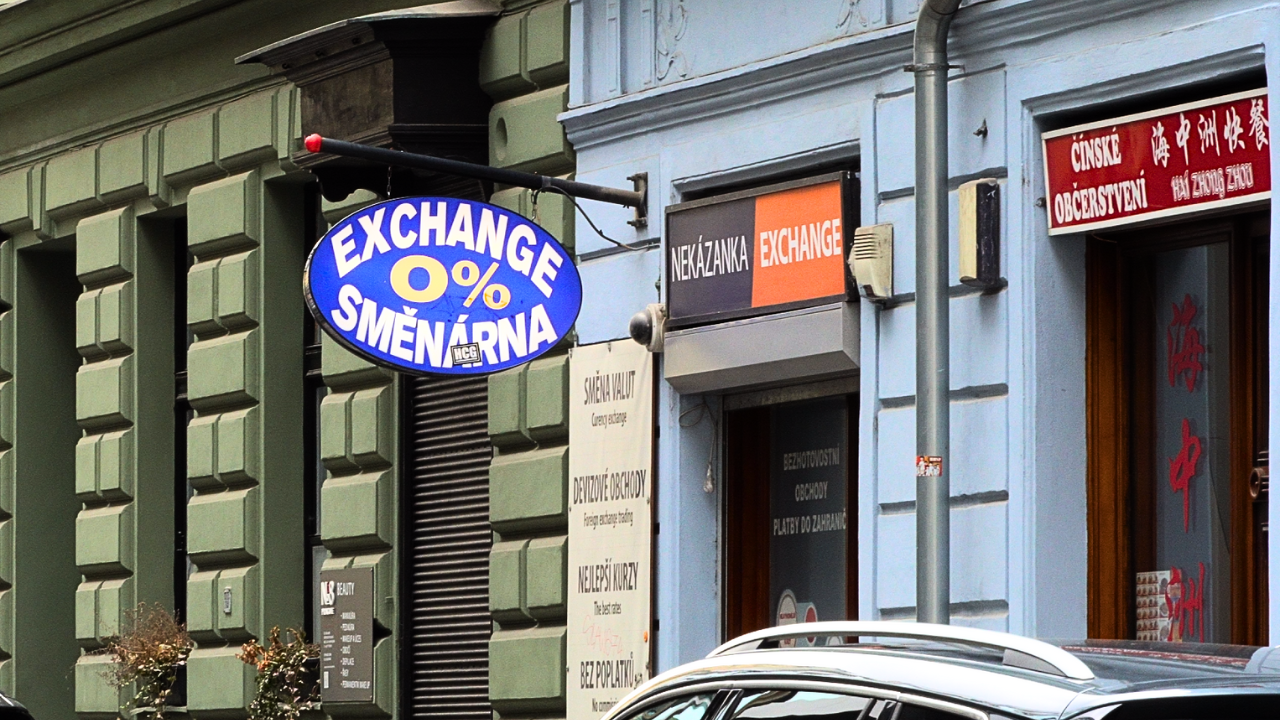
Exchange Office Rip-Offs — Still Around, But Manageable
Currency exchange scams are the most persistent problem for visitors. The setup is often subtle. Some exchange offices advertise “0% commission,” which sounds great until you realize they’ve simply built their profit into the rate itself.
The real trap, though, used to come from street exchangers — shady individuals who approach tourists outside currency booths. They’ll offer an “amazing” rate and claim they’re leaving Prague and just need to get rid of their Czech crowns. But what they hand you is usually old, fake, or foreign currency.
Fortunately, this scam is fading. Most tourists now Google what Czech crowns look like or watch travel videos before arriving. Still, the golden rule stands:
Never exchange money with strangers and always compare exchange rates first.
Tip: Check the official daily rate on the Czech National Bank website. Choose an exchange office that’s close to that number and always confirm the rate before handing over any money.
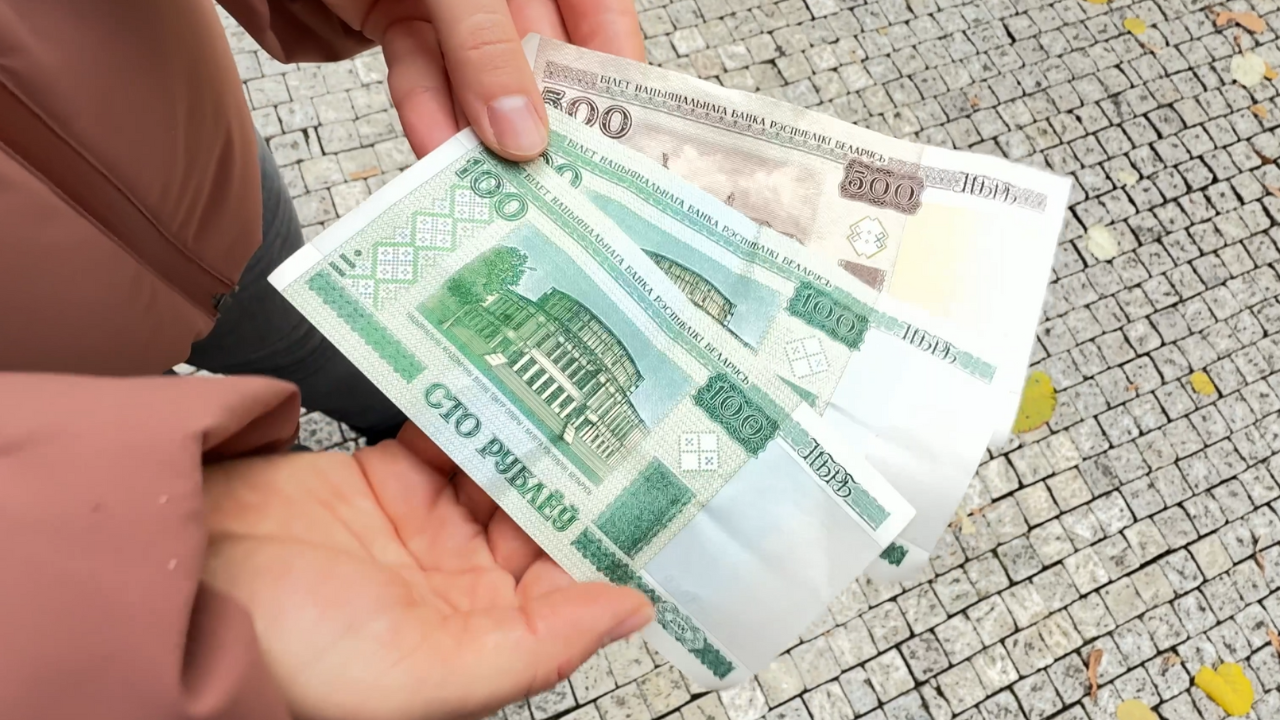
Not Czech Money
The “Can You Split This Bill?” Scam — Watch the ATMs
Here’s how this one works: you withdraw cash from an ATM, often getting larger notes like 2,000 CZK bills. Seconds later, a friendly stranger approaches you and offers to “split” your big bill into smaller ones.
Seems helpful, right? Not quite. The smaller bills they hand over are usually another country’s currency — or old Czech bills that are no longer valid.
Tip: Always decline politely. The moment anyone offers to “exchange money” with you, even in front of an ATM, it’s a red flag.
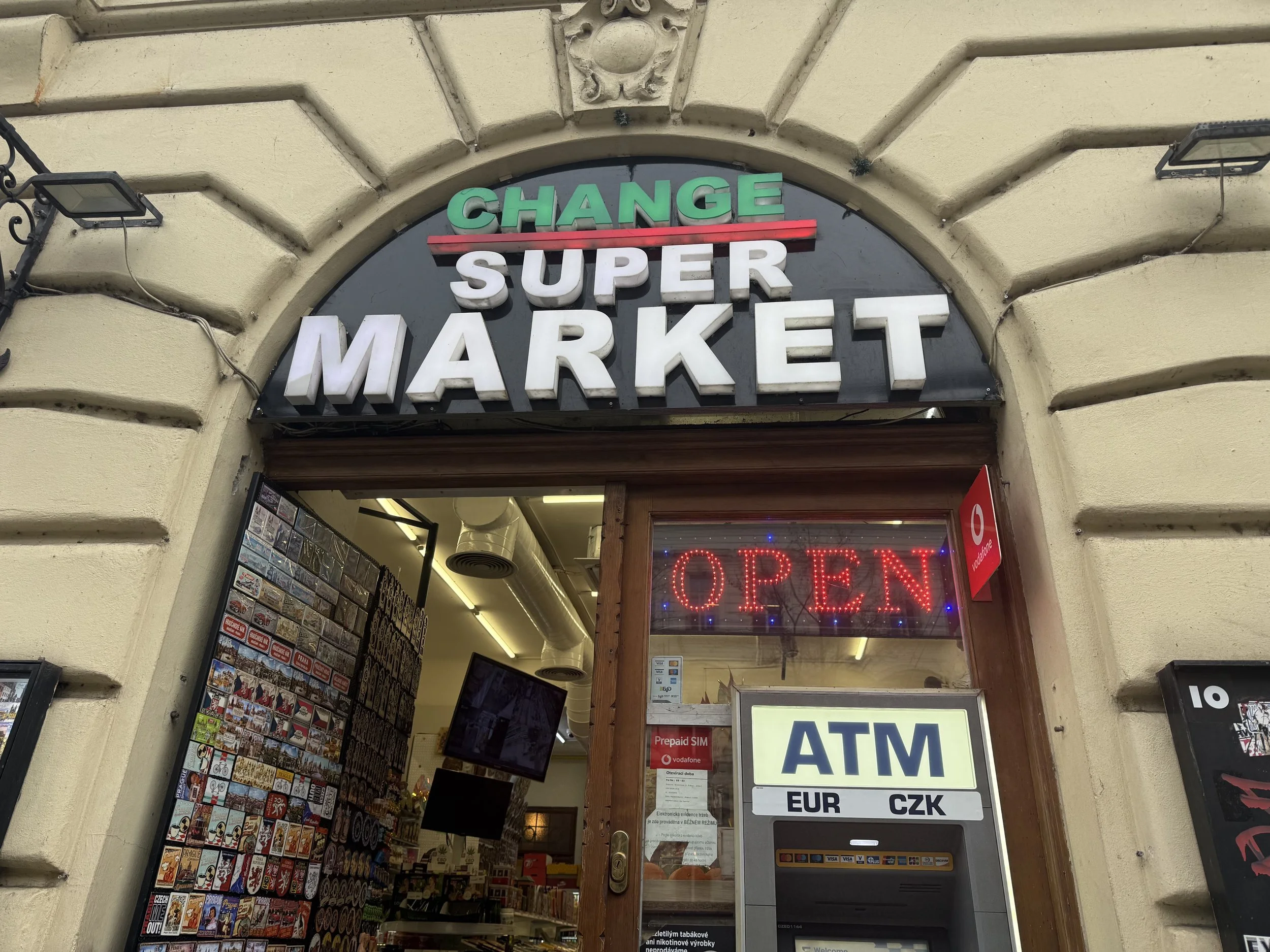
Convenience Store Overcharging — Still Happens
This scam is sneakier because it relies on confusion rather than deception.
Some small corner shops, especially near major tourist spots, might charge more than what’s displayed on the price tag. The clerk might quote a higher price at the register, hoping you won’t notice if you’re in a rush or unsure about the local currency.
Locals catch it immediately — they know that a bottle of water shouldn’t cost 100 CZK. But tourists, nervous and unfamiliar, often just hand over the money.
Your best bet? Stick to verified mini-markets like Žabka. You’ll recognize them by their green sign with a little frog logo. Prices are honest, and you’re unlikely to encounter problems.
Scams That Are Actually Legit
Now that we’ve looked at the bad guys, let’s clear up a few tourist myths — things that feel like scams but really aren’t.
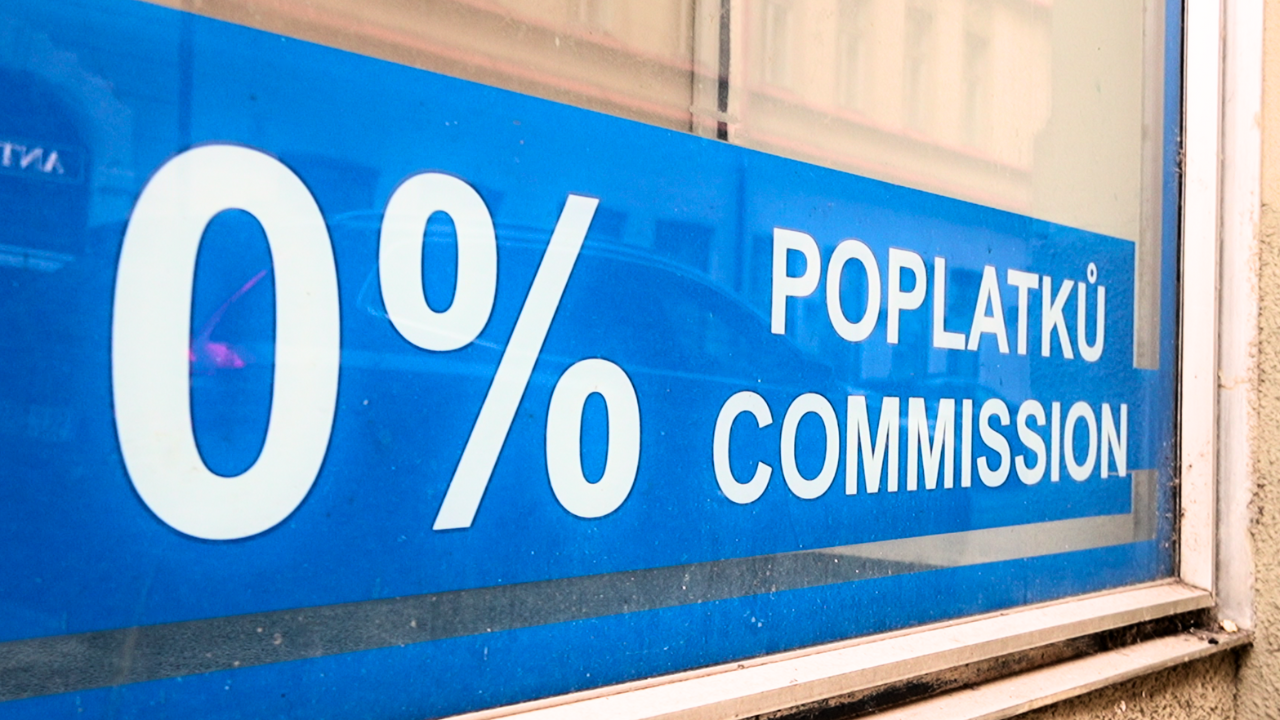
1. Exchange Offices with “Zero Commission.”
Yes, it’s misleading marketing — but technically not fraud. They’re allowed to display “0% commission” because the profit is hidden inside the rate, not added later.
For example, imagine the official exchange rate for 1 EUR is 25.29 CZK. A “0% commission” exchange spot might offer 25.00 CZK instead. That means for every €100, you lose 29 CZK — about €1.20. It doesn’t feel huge, but it adds up quickly if you’re changing a lot of money.
Always check both “We Buy” and “We Sell” columns on the posted rate chart. That’s where the truth lies.
2. ATM Conversion Offers
When you withdraw cash in Prague, ATMs often ask whether you want to apply “conversion” or “dynamic currency conversion.” Saying yes lets the ATM choose the rate — which is always worse.
Decline the conversion and let your home bank handle it. It’s not a scam; it’s just a sneaky upsell. Some will have it higher, like UniCredit, Raiffeisenbank and Euronet, which charge 13–14 percent overhead. Most banks will charge a withdrawal fee nevertheless, which depends on the ATM you are using. At the moment, only mBank (Moneta) and Fio banka charge no fees.
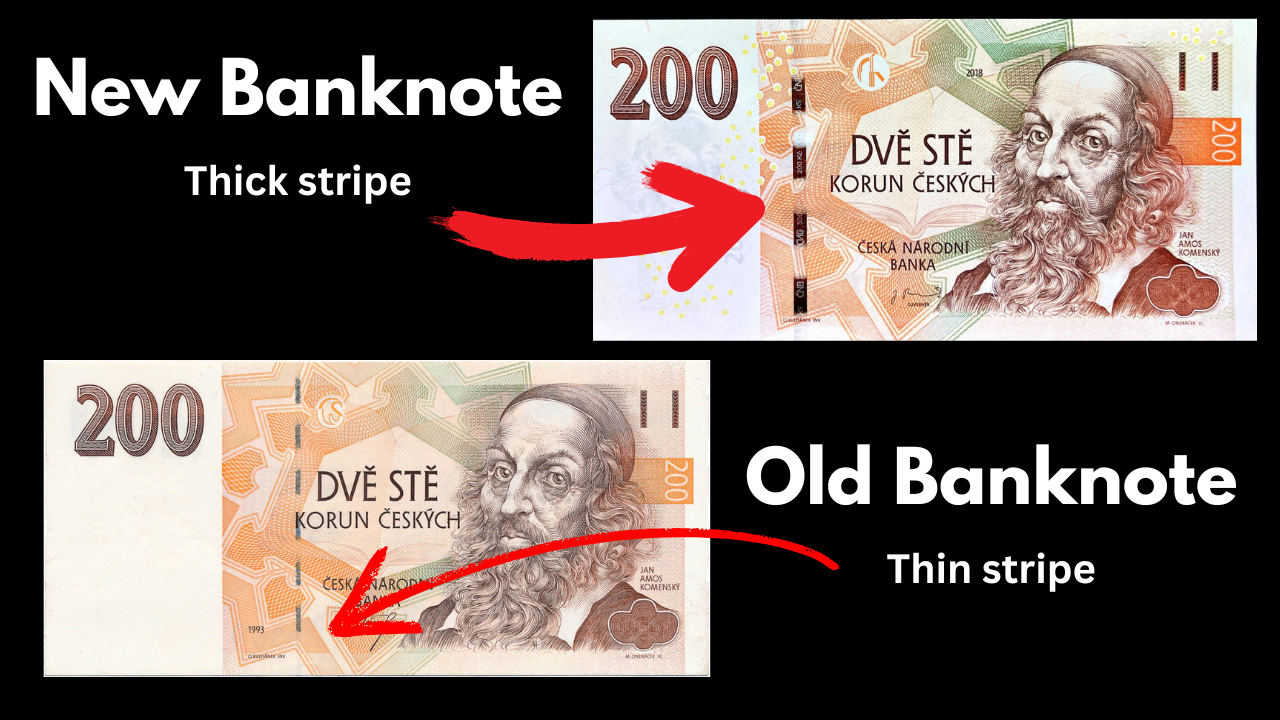
3. Old Banknotes Are Still Around
Some banknotes have recently been discontinued, so you now have to be careful when accepting cash. Outdated banknotes are hard to spot: they have a very thin silver stripe, whereas the new notes have a thicker one. If it’s your first time handling Czech crowns, you might not notice the difference.
What to do if you receive an old banknote in Prague? Don’t worry — it’s not hopeless, but you will have to go to the Czech National Bank on Na Příkopě Street to exchange it. There is no alternative, unfortunately, as regular exchange offices and other banks do not accept outdated notes. So please pay attention to your cash!
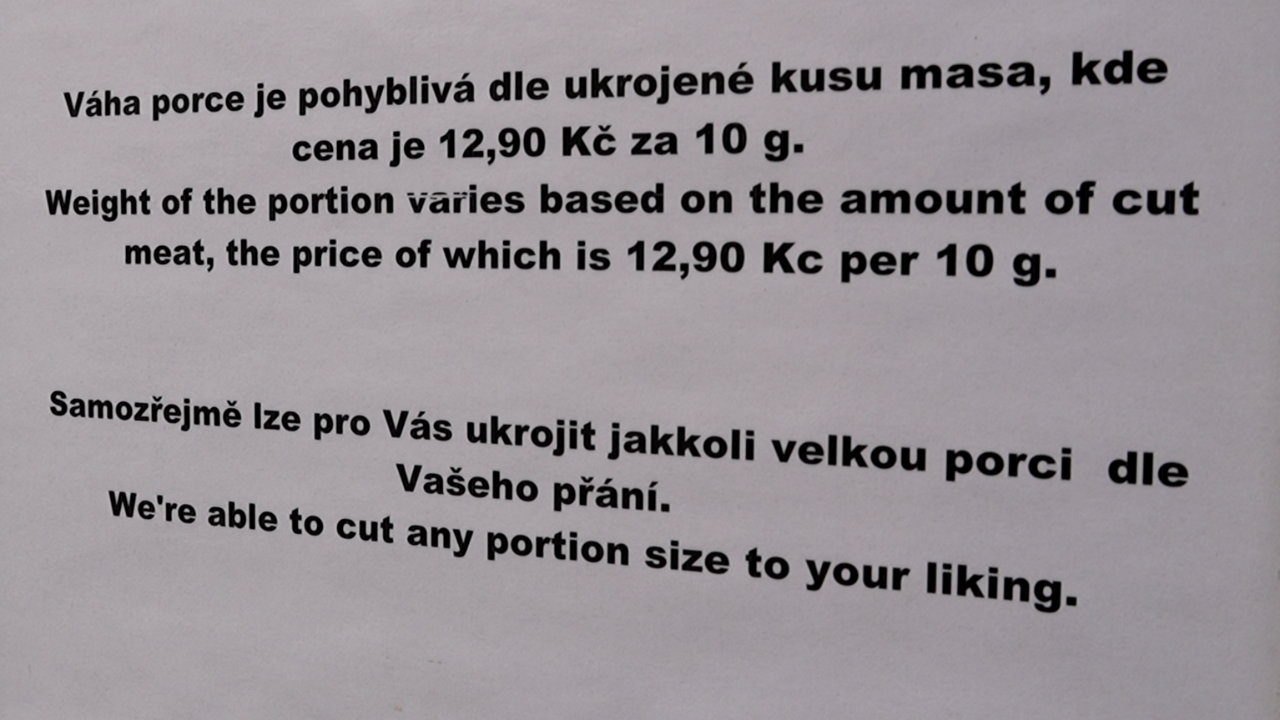
A sign on Prague Ham stall
4. Food Sold by Weight
At Prague’s Christmas or Easter markets, food prices are usually listed per gram, not per kilo. First-time visitors often order a full portion, thinking the total will match the number on the sign — and then get shocked when the price triples.
Nowadays, many stalls clearly display total price examples (e.g., 100 g = 129 CZK, 200 g = 258 CZK), so it’s more transparent than before. Still, always check the math before ordering.
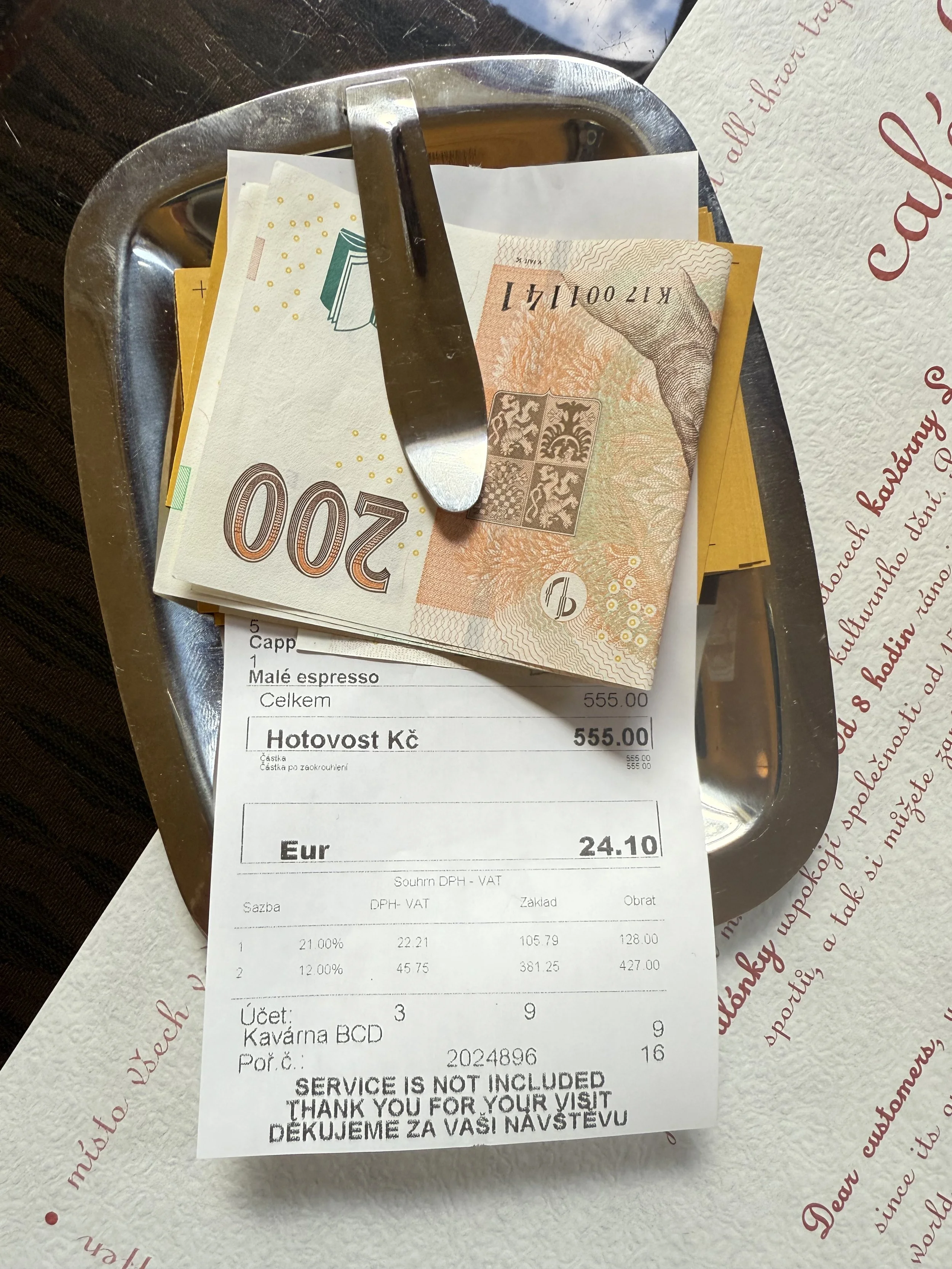
4. 10% Tip Included in Restaurants
This used to be a trick at touristy restaurants — sneakily adding a “service charge” to the bill. But by 2026, more and more Czech restaurants openly include a 10% tip in the final price. It’s not a scam anymore; it’s just part of the evolving tipping culture.
5. “DPH” on Receipts
If you see DPH on your restaurant or store bill, don’t panic — it’s simply the Czech term for VAT (Value Added Tax). Everyone pays it, locals included.
6. Drink Counting by Waiters
Czech bartenders often mark your drink count on a piece of paper or your coaster instead of updating the receipt in real-time. It’s just the traditional way of tracking your tab, not a scheme to trick you.
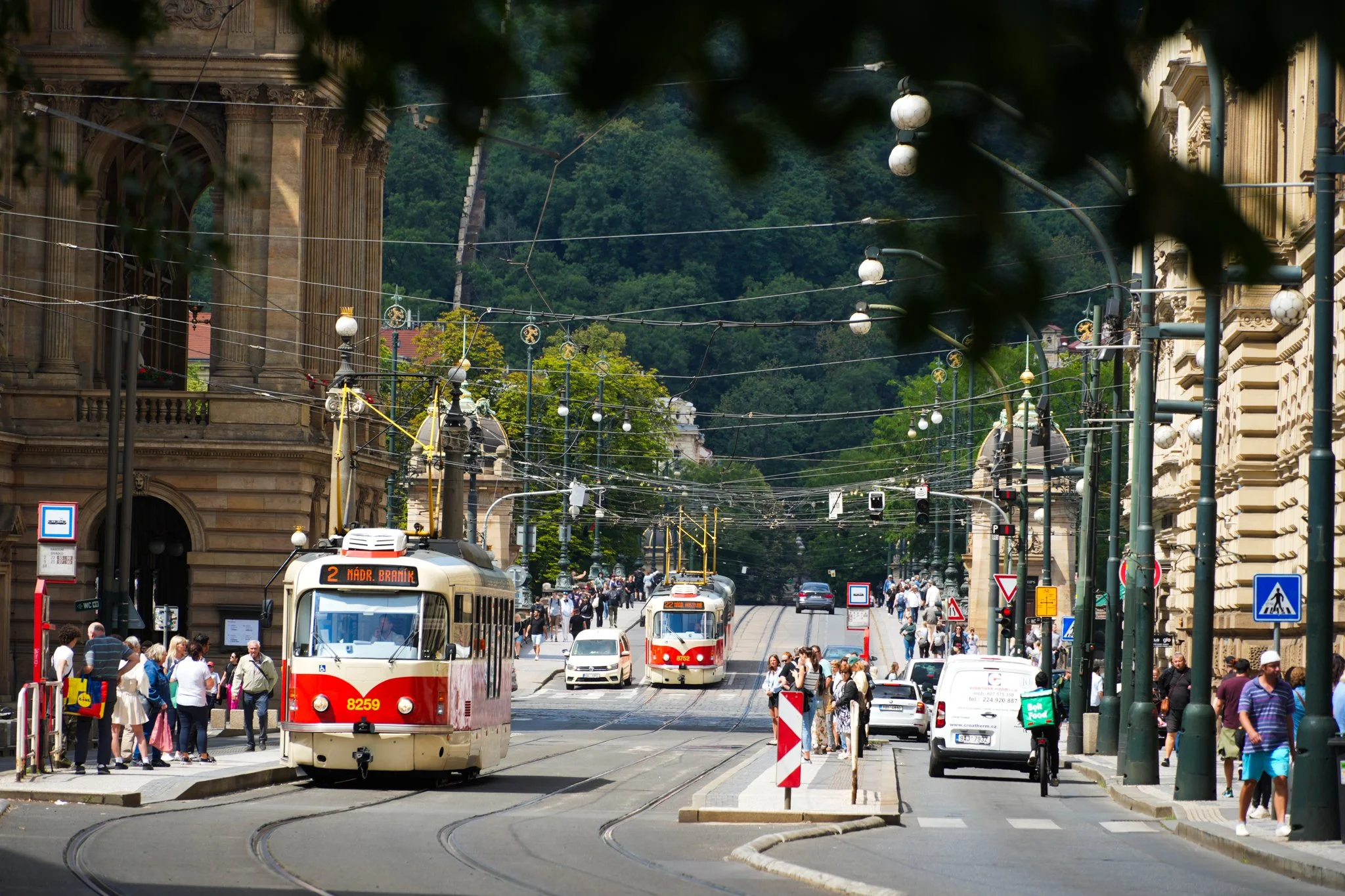
7. Ticket Inspector Fines on Public Transport
If you plan to use Prague’s excellent public transport network — trams, metro, or buses — there’s one thing to understand clearly: ticket inspectors are real, and they mean business.
Many tourists get fined not because they didn’t buy tickets, but because they didn’t validate them. You must stamp or activate your paper ticket immediately after boarding. Some inspectors exploit this “gray zone”: they’ll wait for tourists who are just trying to figure out how to validate their ticket and issue a fine before the process is finished. It’s not strictly illegal on their part — but it’s definitely harsh.
To avoid problems:
Use the PID Lítačka app to buy and validate tickets instantly from your phone.
Or buy a 24-hour or 72-hour pass, validate it once, and you’re good for the duration.

The City Isn’t Dangerous — The Internet Just Magnifies It
Despite all these warnings, Prague today is much safer for visitors than it was ten years ago. Scams haven’t disappeared completely, but the combination of apps, online awareness, and shared experience on Reddit and travel forums has made it much harder for scammers to operate. Tourists are savvier, technology is smarter, and scam artists are running out of easy marks.
If you spent an entire week in Prague without reading any of the fear-mongering articles online, chances are you’d never experience a single scam. Most locals are honest, helpful, and happy to share advice if something doesn’t look right.
How to Stay Safe and Savvy in Prague
Here’s a quick checklist to keep your trip smooth and scam-free:
Use Uber, Bolt, or Liftago instead of random taxis.
Exchange money only at verified offices near the Old Town or main train station — never on the street.
Decline ATM conversion offers.
Watch how prices are listed — especially per 100 grams in markets.
Validate your public transport ticket immediately after boarding.
Don’t let strangers “help” with money.
Always check your receipt before leaving a store.
Follow these simple steps, and you’ll avoid 99% of the trouble travelers used to worry about.
Final Thoughts
Prague’s reputation for scams comes from a time when tourists were less connected and easy to fool. In 2026, that era is fading fast.
The truth is: Prague is one of the safest and most transparent cities in Central Europe — especially if you stick to modern apps, trusted retailers, and basic common sense.
Scams may never fully vanish, but today’s travelers have an unbeatable weapon: information. So stay alert, stay informed, and enjoy exploring one of Europe’s most beautiful capitals — without losing a crown unnecessarily.
WRITTEN BY VALERY
Licensed Prague guide and co-creator of Real Prague Guides (50K+ YouTube subscribers). My company, 100 Spires City Tours, leads some of the highest-rated tours in Prague.
📷 Instagram: @realpragueguides
📺 YouTube: Real Prague Guides
🎫 Book a tour: tours-prague.eu
Disclaimer: This article reflects the personal opinions of the author and is not intended to discourage visitors to Prague from businesses mentioned above.