

The American Millionaire Behind Czechoslovakia
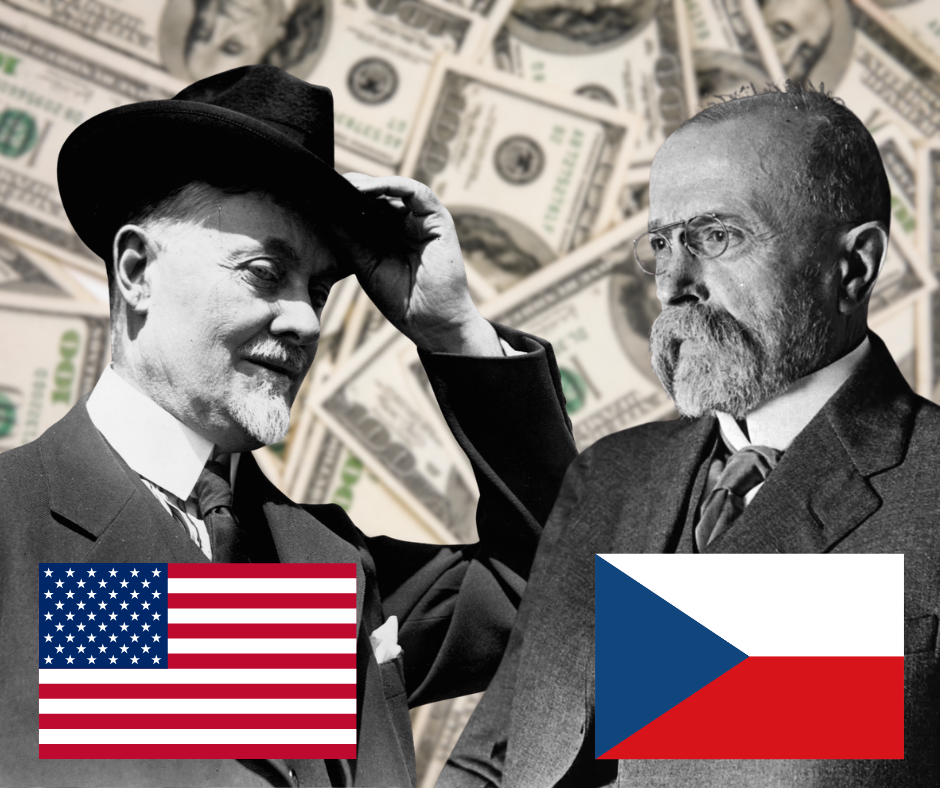
Tomáš Garrigue Masaryk is remembered as the founding father of Czechoslovakia—the philosopher-president who stood for democracy, truth, and moral leadership. His famous motto, “Truth prevails,” still echoes across Prague today.
But behind Masaryk’s rise stood a figure most people have never heard of: an American millionaire who quietly opened doors, financed opportunities, and helped shape the path to independence. Masaryk’s own family later referred to him as the “Godfather of Czechoslovakia.” His name was Charles Richard Crane—and his influence ran far deeper than most history books admit.
Before we uncover Crane’s role, let’s rewind to where it all began.
Masaryk in Prague
In 1896, Masaryk was living in Prague—then part of the Austro-Hungarian Empire—with his wife Charlotte and their four children. He worked as a professor of philosophy at what we now call Charles University.
On the surface, it was a stable academic life. In reality, Masaryk was under heavy pressure. Just two years earlier, he had resigned from the Realist political party, criticizing it for becoming too radical. In 1895, he published The Czech Question, a controversial essay examining Czech national identity.
The reaction was harsh. Nationalists labeled him a traitor, while others accused him of distorting Czech history. Masaryk found himself isolated—intellectually respected, but politically attacked.
It was during this turbulent period that he met Charles Richard Crane.
The American Industrialist
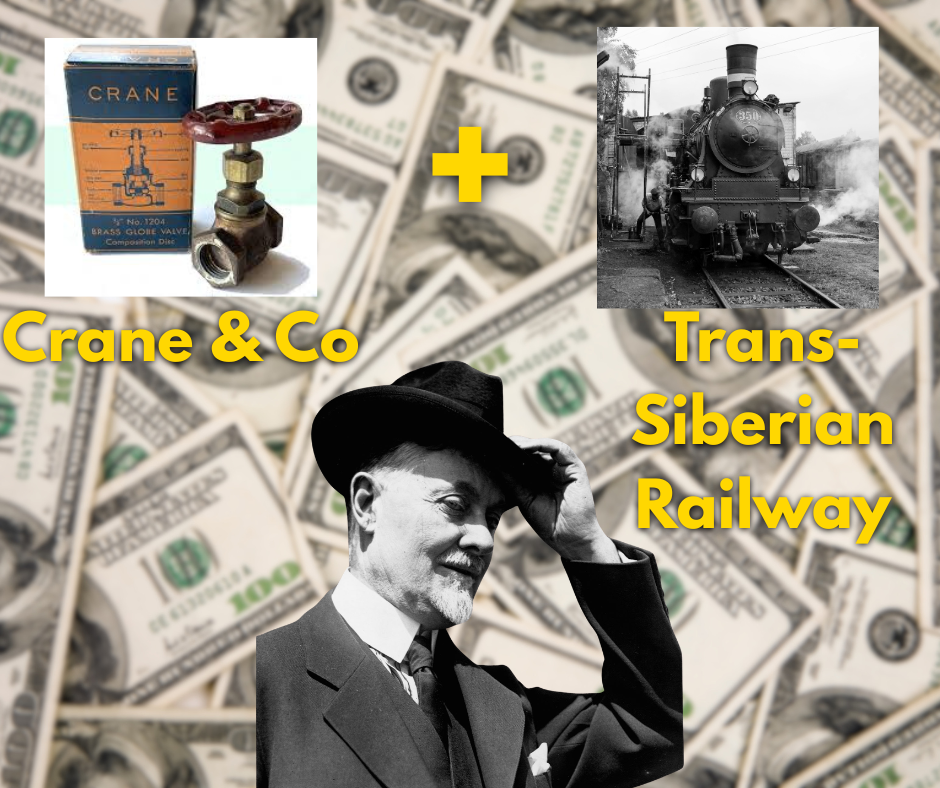
Crane came from a powerful industrial family in Chicago that made its fortune in plumbing manufacturing. Unlike many elites of his time, he avoided flashy displays of wealth. Instead, he invested his energy into travel, culture, and international connections. One region fascinated him above all: Russia. Crane visited the Russian Empire more than 20 times. He met figures like Leo Tolstoy and even Tsar Nicholas II. He developed a strong interest in Orthodox Christianity—at one point even bringing a Russian church choir to perform in the United States.
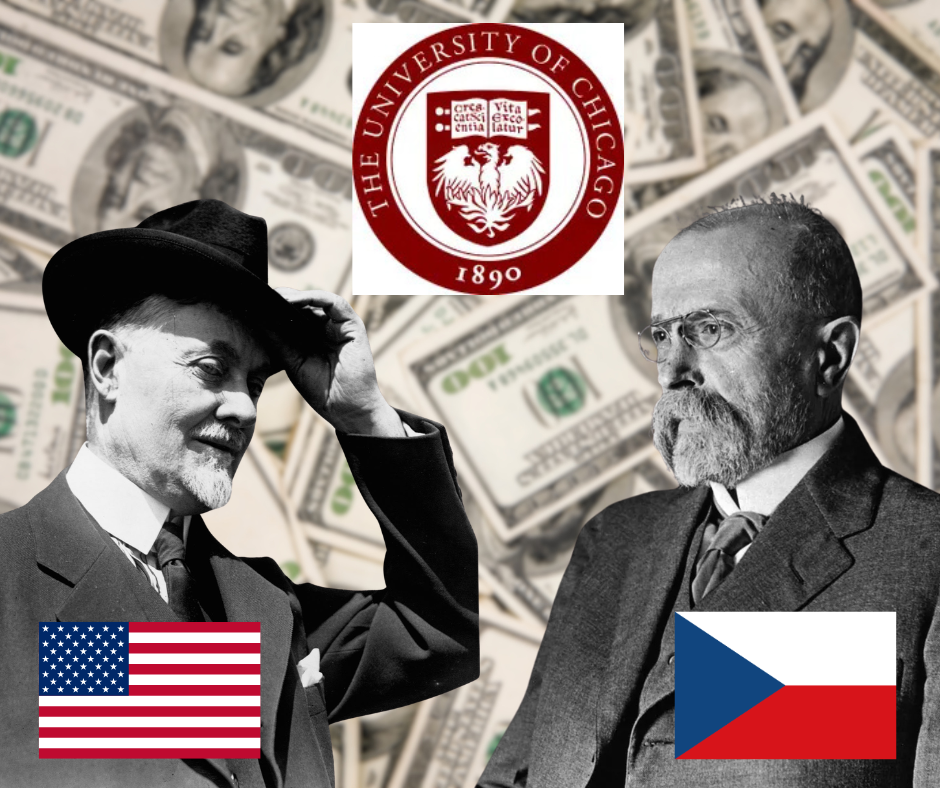
But his interests weren’t just cultural. They were also strategic. Crane secured major business deals in Russia, including involvement in the Trans-Siberian Railway through a Westinghouse-backed venture. His network stretched across politics, industry, and academia. And through a mutual connection—William Harper, president of the newly founded University of Chicago—Crane was introduced to Masaryk. That meeting would change both of their lives.
Opportunity in America
Crane was helping build the University of Chicago into a major intellectual center, including one of the first departments focused on Slavic studies. He needed experts—and Masaryk was an ideal candidate.
In 1902, Crane invited Masaryk to the United States. Masaryk delivered 17 lectures, covering Czech culture, Russian literature, and the political situation of Slavic nations. He earned around $8,000 for his work—equivalent to roughly $300,000 today. For comparison, that was nearly a decade’s worth of a Prague professor’s salary.
Masaryk returned home not just wealthier, but with stronger international connections—and a powerful ally in America.
A Personal Bond
The relationship between Masaryk and Crane went beyond professional cooperation. It became deeply personal. When Masaryk’s youngest son, Jan, struggled with school and behavior, the family turned to Crane for help. At 19, Jan was sent to work in Crane’s factory in Connecticut. He stayed in the United States for nearly a decade. Despite periods of stability, Jan struggled with mental health and was eventually treated at a sanatorium in New Jersey, where he was diagnosed with a form of schizophrenia.
This episode highlights how close the two families had become. Crane wasn’t just a supporter—he was someone Masaryk trusted with his own family.
The Hidden Role in Independence
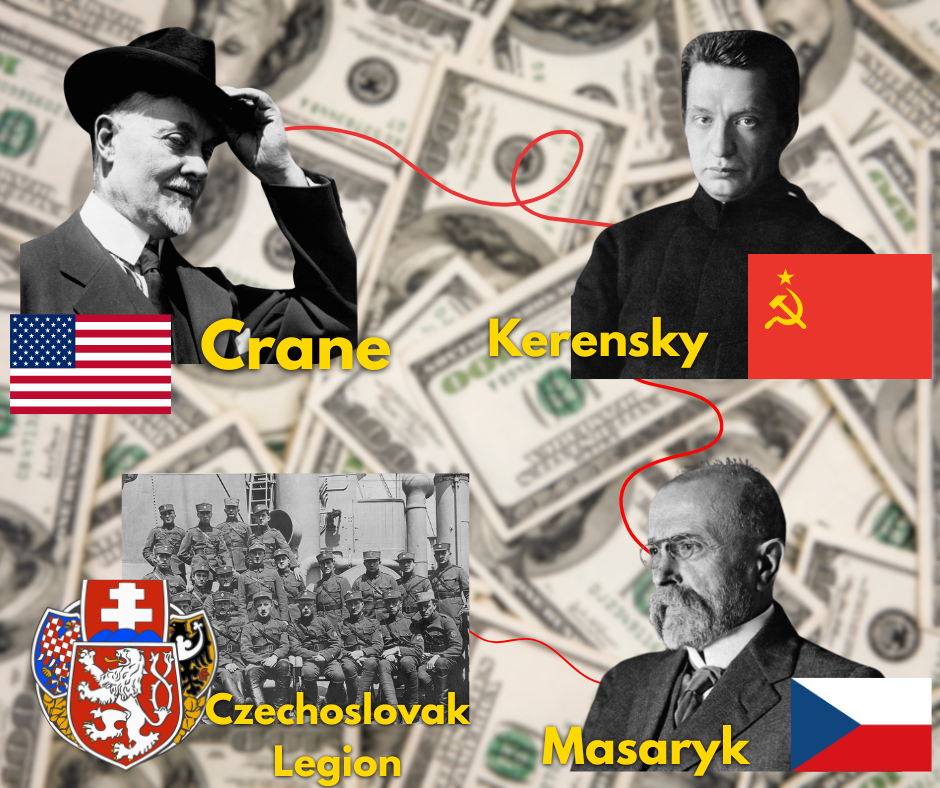
Now we reach the most intriguing—and often overlooked—part of the story. During World War I, Masaryk went into exile and began campaigning for Czechoslovak independence. He traveled across Europe and Russia, trying to gain support from the Allied powers. One key step was proving that Czechs and Slovaks were actively fighting against Austria-Hungary. This led to the formation of the Czechoslovak Legion—units made up of deserters and prisoners of war.
In 1917, Masaryk arrived in Petrograd (St. Petersburg), hoping to secure political backing. His main contact, Foreign Minister Pavel Milyukov, lost power just as Masaryk arrived. At that critical moment, Charles Crane appeared—already present in Petrograd. Thanks to Crane’s connections, Masaryk gained access to Alexander Kerensky, the Russian Minister of War. With Crane’s backing, Masaryk secured approval to organize a Czechoslovak military force of around 20,000 men. Without that intervention, the Legion—and the international credibility it brought—might never have materialized.
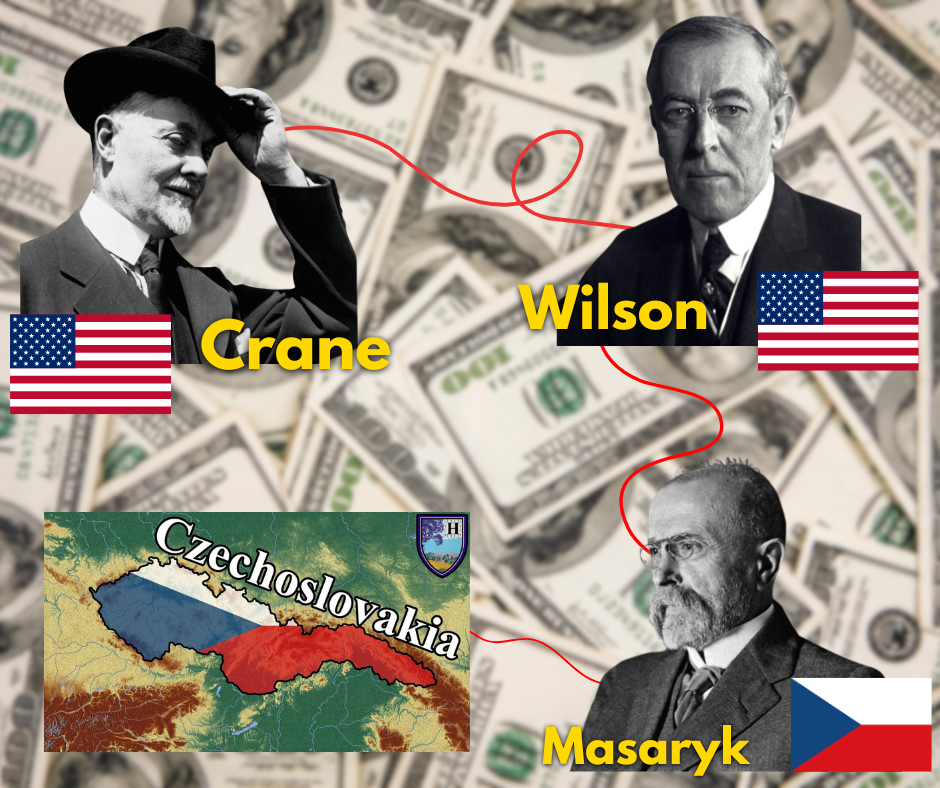
And without that credibility, Masaryk’s later negotiations with leaders like U.S. President Woodrow Wilson would have been far more difficult. Crane’s influence also stretched into the highest levels of American politics through his connection to Woodrow Wilson. As a well-connected businessman and patron of international affairs, Crane had access to circles that few private citizens could reach, and his network helped keep Masaryk’s cause visible in the United States. That mattered immensely once the war was reshaping Europe, because Wilson’s support for national self-determination became one of the key political ideas behind the creation of Czechoslovakia.
The Man in the Shadows
Masaryk became the face of Czechoslovak independence. Crane, meanwhile, faded into the background. Yet his influence was everywhere: funding, connections, introductions, and strategic support at key moments. Why did Masaryk rarely highlight Crane’s role in his writings? That remains an open question. Perhaps it didn’t fit the narrative of a national struggle driven from within. Or perhaps Crane himself preferred to remain behind the scenes. Either way, history remembers one name far more than the other. But if you look closely, the story of Czechoslovakia’s founding isn’t just about a philosopher-president. It’s also about an American industrialist who helped make it all possible.
WRITTEN BY VALERY
Licensed Prague guide and co-creator of Real Prague Guides (50K+ YouTube subscribers). My company, 100 Spires City Tours, leads some of the highest-rated tours in Prague.
📷 Instagram: @realpragueguides
📺 YouTube: Real Prague Guides
🎫 Book a tour: tours-prague.eu
Disclaimer: This article reflects the personal opinions of the author and is not intended to discourage visitors to Prague from businesses mentioned above.